Exporting glass-processing machinery since 2002, with international project support from planning to installation and training.
Glass Washing Machine Price
glass washing machine price is successfully launched and promoted by Guangzhou Sanken Glass Machinery Co., Ltd.. The product has received extremely positive responses for it has brought great convenience to and added comfortability to users' life. The quality of the product's material has met the international standard and has been strictly certified to provide clients with the best possible quality so as to promote further cooperation.
SANKEN becomes one of the powerful brands in the industry for several consecutive years. The products are marketed globally to grasp more commercial opportunities, and the sales volume reflects the marketing results. Customers post positive comments via social media, recommending the products to friends and relatives. The product quality is fully evaluated by the customers and satisfies customers' demands for performance. We tend to receive more orders from home and abroad.
This high-performance glassware cleaning machine ensures spotless results with minimal effort through its advanced technology and user-friendly features. Engineered for both residential and commercial use, it delivers consistent quality while handling delicate items and heavy-duty tasks efficiently. Built to meet diverse needs, this equipment maintains optimal performance across various applications.
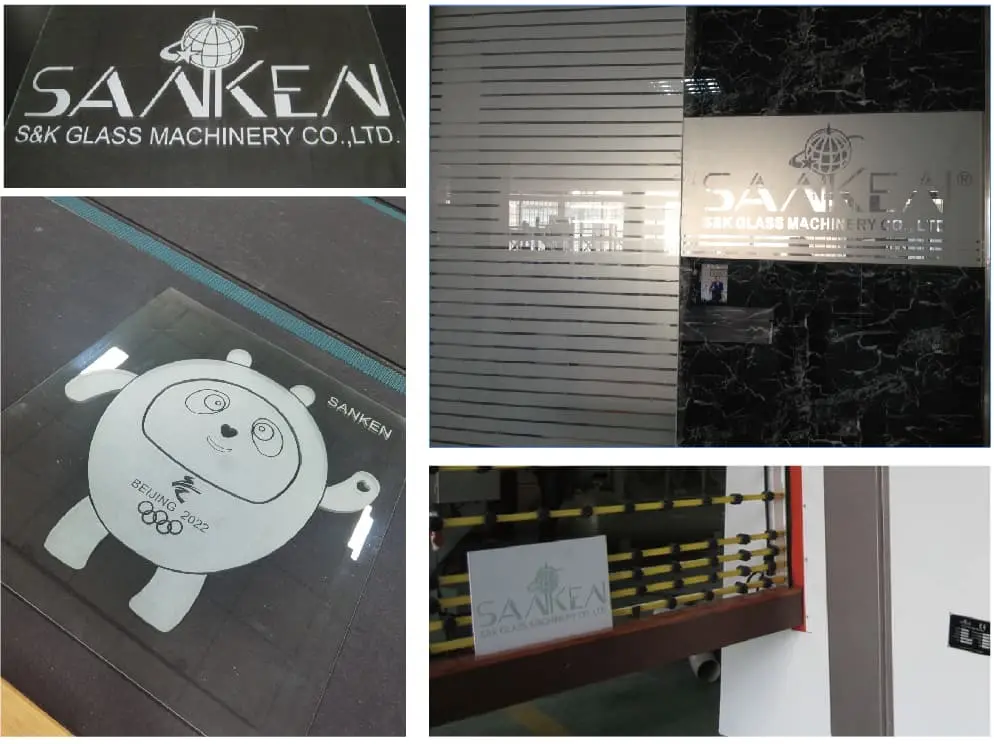
- High water and energy efficiency reduce utility costs while maintaining optimal cleaning performance for glassware.
- Quick wash cycles save time without compromising on thorough cleaning, ideal for busy households or commercial use.
- Advanced filtration systems minimize water waste, ensuring cost-effective and eco-friendly operation.
- Constructed with corrosion-resistant materials like stainless steel to withstand frequent use and extend lifespan.
- Reinforced glass racks and sturdy components ensure long-term reliability even in high-traffic environments.
- Durable motor and sealing technology prevent leaks and mechanical wear, reducing repair costs over time.
- Entry-level models offer competitive pricing for budget-conscious buyers without sacrificing essential features.
- Cost-effective for small businesses or homes needing reliable glass cleaning without high-end expenses.
- Balanced price-to-quality ratio ensures minimal replacements and long-term value.
Why Choose SANKEN for Your Glass Silk Screen Printing Production Line?
Single-Colour and Multi-Colour Configurations
Single-colour, four-colour and five-colour line layouts are available as planning references. The number of printing stations and their arrangement are selected according to the required pattern, colour sequence and production capacity.
Servo-Controlled Printing
Servo control manages the printing squeegee and ink-return movements. PLC and touch-screen controls allow operators to manage line settings, with programmed protection functions for equipment operation.
Glass Positioning and Conveying
Glass positioning mechanisms and synchronized anti-slip conveyor belts support glass transfer and alignment through the printing process.
Screen Preparation Equipment
The supporting equipment covers mesh stretching, emulsion coating, exposure, developing and screen drying. This allows screen preparation requirements to be considered alongside the printing line.
Glass Silk Screen Printing Process
Glass Printing Workflow
Prepared Glass → Glass Positioning → Screen Printing → Drying or Curing as Required → Inspection
This is an outline for line planning. Glass preparation, ink drying or curing, and any subsequent heat treatment must be matched to the selected ink system and finished product. These stages do not imply that all equipment is included in every configuration.
Screen Preparation Workflow
Mesh Stretching & Frame Bonding → Emulsion Coating → Screen Drying → Exposure → Developing → Final Screen Drying
Screen preparation is a separate supporting process. The horizontal dryer is used after emulsion coating; the vertical dryer is used after screen cleaning and developing.
Glass Screen Printing Line Configurations
The printing line is configured around glass size, artwork, the number of colours and the required output. Multi-colour projects also require the colour sequence, alignment and drying or curing arrangements to be defined before the layout is finalized.
Single-colour configuration for a one-colour printing requirement.
Four-colour and five-colour configurations for projects requiring multiple colour stages.
PLC and touch-screen operation with servo-controlled printing movements.
Conveying and positioning equipment selected for the required glass format.
Screen Preparation and Supporting Equipment
Automatic Screen Stretching Machine
PLC and touch-screen controls manage mesh clamping and tension adjustment. After the mesh reaches the required tension, pneumatic lifting brings the screen frame into contact with the mesh for adhesive bonding.
Automatic Screen Stretching Machine
Screen Positioning Table
Automatic Screen Coating Machine
Coating settings include speed, single-sided or double-sided application and repeated passes. The described configuration allows 1–20 coating passes, with a constant-pressure system, pneumatic frame clamping and automatic stop after the preset cycle.
Automatic Screen Coating Machine
Screen Coating Machine — Additional View
Horizontal Screen Drying Oven
The horizontal drawer-type oven dries screens after photosensitive emulsion coating. Screens are placed with the printing surface facing upward. Temperature control and hot-air circulation support the drying process.
Horizontal Screen Drying Oven
Horizontal Screen Drying Oven — Additional View
Screen Exposure Machine
Horizontal and vertical exposure configurations are described in the equipment range. The control system stores exposure settings and completes vacuum, exposure and venting stages automatically. Light-controlled exposure and an oil-free vacuum pump support the process.
Vertical Screen Exposure Machine
Vertical Screen Exposure Machine — Additional View
Screen Developing Machine
The PLC and touch-screen-controlled developing machine uses front and rear spray systems to wash out the exposed screen. Features include stainless steel construction, an observation window, staggered nozzles, automatic water replenishment and a blower drying device.
Screen Developing Machine
Screen Developing Machine — Additional View
Screen Developing Machine — Equipment View
Vertical Screen Drying Oven
The vertical oven dries screens after cleaning and developing. Its vertical loading arrangement is intended to save floor space. Stainless steel internal panels and heaters, hot-air circulation and an insulated enclosure support screen drying.
Vertical Screen Drying Oven
Vertical Screen Drying Oven — Additional View
Glass Screen Printing Production Line Layouts
These drawings show single-colour, four-colour and five-colour arrangements. Final layouts are planned around glass dimensions, colour requirements, production flow and available factory space.
Single-Colour Glass Screen Printing Line
Reference layout; equipment dimensions and station arrangement are confirmed for each project.
Four-Colour Glass Screen Printing Line
Reference layout; equipment dimensions and station arrangement are confirmed for each project.
Five-Colour Glass Screen Printing Line
Reference layout; equipment dimensions and station arrangement are confirmed for each project.
Five-Colour Printing Line — Additional Layout
Reference layout; equipment dimensions and station arrangement are confirmed for each project.
Screen-Printed Glass Applications
Glass screen printing can be configured for architectural and office glass, kitchen and furniture glass, appliance panels, decorative glass and automotive windshields. Suitability depends on the glass specifications, artwork, ink system and subsequent processing requirements.
Screen-Printed Glass — Example 1
Screen-Printed Glass — Example 2
Screen-Printed Glass — Example 3
Screen-Printed Glass — Example 4
Glass Screen Printing Line Planning & Project Support
SANKEN has been exporting glass-processing machinery since 2002. For glass screen printing projects, we support equipment configuration, production-line planning, factory layout, equipment manufacturing, pre-shipment inspection, installation, commissioning, operator training and after-sales technical support.
To discuss a suitable configuration, provide your glass dimensions and thickness, print area, artwork, number of colours, ink system, required output, existing screen preparation equipment and factory dimensions. Drying, curing and any downstream heat-treatment requirements should also be confirmed during planning.
1.Pioneered positioning mode: Non touch glass after positioning probe switch. Longer life, more convenient operation and maintenance;
2.Patent structure, processing glass thickness 3~12mm;
3.All imported servo electronic, to make the equipment more stable and reliable;
4.Transmission using a toothed chain transmission, more stable, more static;
5.Opening & Closing using rack drive, speed up to 40 meters per minute, more accurate, more durable;
6.Hemline grinding function.
Glass Automatic Four Sides Edger is designed for glass chamfering with features of economy, efficiency and automatic identification of glass size and thickness. This machine is suitable for processing the construction glass, insulating glass of window and door and other different size flat glass with a large quantity. Being connected with other machines, the production efficiency can be improved deeply.
1.Adopt the servo-driven, annular timing belt and rubber roller for conveying and polyurethane wheel for press which ensures the stable glass transmission, accurate positioning and excellent grinding performance.
2.The automatic opening and closing mechanism of grinding motor and lateral pressing wheel are adopted the gear reducer and servo driver. Assembling with the ball screw rod, liner guide rail, pinion and rack, the mechanism can be accuracy.
3.The motor rotation system adopts the gear reducer and servo driver that make it position precisely.
4.Adopt limit switch probe positioning instead of touch glass that avoid the distress of parameters resetting due to the replacement of probe. This novel design greatly improves the life of the limit switch probe and makes the operation and maintenance more convenient.
5.Adopt human interface and PLC control system, easy operate.
Highly intelligent high-speed four-side grinding is widely used in the fine edge grinding of door and window glass. For developed countries, they need it very much, and for developing countries, which do not have high requirements for edge grinding quality, it will also be completely suitable for them. Use seaming machine to grind the edge to achieve the requirements of tempered edge grinding.
In August 2025, SANKEN Glass Machinery Co., Ltd. successfully completed the commissioning and loading of a glass processing machine, now ready for shipment to our client in Mexico. This delivery highlights SANKEN’s expertise in equipment manufacturing and international logistics, reaffirming our commitment to efficient execution and reliable performance for global customers.
Prior to shipment, the equipment underwent multiple rounds of testing and calibration to ensure operational stability and precision. During the loading process, our team followed strict export packaging standards, applying multi-layer protection and reinforced strapping, with on-site supervision to guarantee transport safety.
The machine will be deployed in the client’s newly established production line in Mexico, supporting enhanced efficiency and product quality in glass deep processing. At SANKEN, we believe that delivering equipment means delivering trust.
We welcome inquiries from global partners and are ready to provide you with the most professional one-stop glass processing solutions.
1. Startup Check
Before operating the machine:
Confirm water supply and drainage
Check power connection and emergency stop
Inspect chamfering wheels for wear
2. Parameter Setup
Adjust settings based on glass thickness and edge requirements:
Chamfering angle (e.g. 45° or R1–R40 mm)
Conveyor speed (5–10 m/min)
Pressure and wheel rotation speed
3. Glass Positioning
Place glass on conveyor track
Align edge with guide rail
Ensure stable placement to avoid vibration
4. Edge Inspection & Cleaning
Check edge smoothness and uniformity
Remove glass and clean surface
Shut down machine and perform maintenance if needed
✅ Conclusion
Mastering the operation of a glass chamfering machine ensures safe, high-quality edge finishing. 👉 Contact SANKEN for customized training and equipment support.
Querétaro, Mexico – December 2025
SANKEN is proud to showcase our latest installation in North America. This large-scale glass processing factory in Querétaro, Mexico, selected SANKEN to provide a comprehensive production solution, combining high-speed automation with flexible processing capabilities.
The project features a Double Edging Line connected to a Silk Screen Printing Line, along with Dual Washing Solutions (Horizontal & Vertical) to handle various glass specifications.
1. The Automated Main Line (Four side edging machine & Horizontal Washing)
Our in-house designers and engineers have produced countless great designs for customers from different industriesThe core of this facility is the integrated line designed for mass production. Glass sheets pass through the SANKEN Double Edging Machine for precise edge grinding, then immediately enter the Horizontal Glass Washing Machine.
Seamless Connection: No manual handling is required between edging and washing.Perfect Cleaning: The horizontal washer ensures the glass is 100% dust-free, a critical requirement for high-quality silk screen printing.
#unit-FA61eZPB3i0gEQV .ce-video_inner{justify-content:center;}
×
Video: Overview of the SANKEN automated line in the Mexico factory.
#unit-LKPwbxDcEMsfg9M .ce-image_inner{justify-content:center;}#unit-LKPwbxDcEMsfg9M .ce-image{--image-effect:1;}@media(max-width:1199px){#unit-LKPwbxDcEMsfg9M .ce-image_item{--svg-color:rgba(21, 132, 199,1);}}
Photo: The expansive conveyor system connecting the processing stages.
2. Advanced Glass Transport & Auxiliary Equipment
The factory layout is optimized for efficiency. Our conveyor systems ensure smooth transport of heavy glass sheets between stations, reducing labor intensity and breakage risk. The facility is also equipped with SANKEN auxiliary equipment to support the entire workflow.
#unit-g8LSOY2jGXcfSaq .ce-video_inner{justify-content:center;}
×
Video: Smooth glass transport and SANKEN machinery details.
3. The Vertical Washing Solution
To maximize production versatility, the client also installed a SANKEN Vertical Glass Washing Machine.
Why Dual Washing? While the horizontal washer serves the main line, the vertical washer operates independently. It allows the client to quickly wash small batches or different glass sizes without interrupting the main silk screen production flow.Space Efficient: The vertical design saves valuable floor space.
#unit-R0cHun7TQsdxxRK .ce-video_inner{justify-content:center;}
×
Video: SANKEN Vertical Glass Washing Machine in operation.
4. SANKEN Installation: We Are With You On-Site
A project of this scale requires professional expertise. SANKEN engineers traveled to Querétaro to oversee the entire assembly, wiring, and commissioning process. We worked side-by-side with the local Mexican team to ensure every machine performs at its best.
#unit-Nw7gMwQWcbDBOnl .ce-image_inner{justify-content:center;}#unit-Nw7gMwQWcbDBOnl .ce-image_item{--svg-color:rgba(21, 132, 199,1);}#unit-Nw7gMwQWcbDBOnl .ce-image{--image-effect:1;}
#unit-yHGQFj4acLio46H .ce-image_inner{justify-content:center;}#unit-yHGQFj4acLio46H .ce-image_item{--svg-color:rgba(21, 132, 199,1);}#unit-yHGQFj4acLio46H .ce-image{--image-effect:1;}
Photo: SANKEN engineers providing on-site installation and training services.
Conclusion
From standalone machines to complete factory lines, SANKEN is your trusted partner in the glass industry.
👉[Contact Us Today] for a customized proposal for your factory!
SANKEN Glass Machinery is a Guangzhou-based manufacturer and international supplier of glass-processing machinery and complete production-line solutions.
Contact Us
Contact: Dalia Qiu
Tel: +86 15994813914
Landline: +86-20-82347228
Email: sales@sankenglass.com
WhatsApp: +86 15994813914
ADD: No.2, Xinghai Road, Lanhe, Nansha District, Guangzhou City, China. P.C 511480