Exporting glass-processing machinery since 2002, with international project support from planning to installation and training.



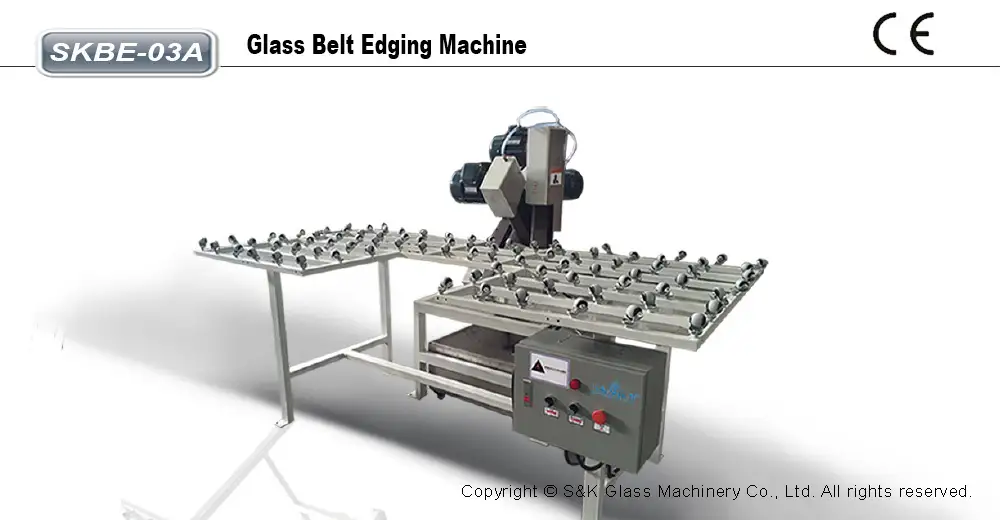
SANKEN Glass Belt Edging Machine
The SANKEN SKBE Series Glass Belt Edging Machine is used for manual rough grinding and edge preparation of flat glass, particularly door and window glass before tempering.
The machine is available with two- or three-belt configurations. Sanding belts can be replaced according to the grinding requirements, and larger working tables can be supplied for specific applications.
Two models are available: SKBE-02A and SKBE-03A. The maximum glass sizes are 1500 × 1500 mm and 1500 × 2000 mm respectively, with a minimum processing size of 300 × 300 mm.
Glass Belt Edging Machine
The SANKEN SKBE Series Glass Belt Edging Machine is designed for manual rough grinding and edge preparation of flat glass. It is commonly used for door and window glass before tempering.
The machine uses motor-driven sanding belts for glass edge grinding. Different belt configurations are available, and the sanding belts can be replaced to suit the required grinding work.
Two models are available: SKBE-02A and SKBE-03A. Both support a minimum glass size of 300 × 300 mm. The SKBE-03A accommodates glass up to 1500 × 2000 mm, while the SKBE-02A supports glass up to 1500 × 1500 mm.
SANKEN SKBE Glass Belt Edging Machine
Machine Features
Manual Glass Edge Grinding
The SKBE Series uses a manually operated grinding process. The operator guides the glass edge through the sanding-belt working area to remove sharp edges and prepare the glass for subsequent processing.
Motor-Driven Sanding Belts
The machine is available with two- or three-belt arrangements. The sanding belts provide the abrasive contact required for rough glass edge grinding.
Replaceable Sanding Belts
Sanding belts can be replaced during equipment maintenance or when a different abrasive specification is required for the grinding operation.
Glass Support Table
The working table supports glass sheets during manual edge grinding. A larger table can be supplied for applications requiring additional glass support.
Pre-Tempering Edge Preparation
Rough edge grinding is commonly performed before glass tempering to remove sharp cut edges and prepare the workpiece for the next production stage.
Working Process
The operator places the glass on the supporting table and guides the edge through the grinding area. After grinding, the glass edge can be inspected before the sheet moves to the next processing stage.
Grinding results depend on the abrasive belt, glass condition and operating method. The SKBE Series is intended for rough edging rather than precision edge polishing.
Machine Details
Equipment views from the SKBE Series.
Technical Specifications
The SKBE-02A and SKBE-03A have different working capacities, belt lengths and power requirements.
| Parameter | SKBE-02A | SKBE-03A |
|---|---|---|
| Maximum Processing Size | 1500 × 1500 mm | 1500 × 2000 mm |
| Minimum Processing Size | 300 × 300 mm | 300 × 300 mm |
| Belt Length | 1450 mm | 1660 mm |
| Total Power | 3 kW | 4.6 kW |
| Machine Dimensions | 2000 × 1500 × 1600 mm | 2000 × 1800 × 1700 mm |
| Weight | 450 kg | 350 kg |
Machine specifications and working-table arrangements should be confirmed according to the selected configuration.
Choosing the Right SKBE Model
SKBE-02A
The SKBE-02A supports glass up to 1500 × 1500 mm and uses a 1450 mm sanding belt. It has a total power rating of 3 kW and overall dimensions of 2000 × 1500 × 1600 mm.
SKBE-03A
The SKBE-03A extends the maximum processing size to 1500 × 2000 mm. It uses a 1660 mm sanding belt and has a total power rating of 4.6 kW.
The appropriate model depends on the glass dimensions, required edge treatment and available working space. Larger support tables can be considered for specific production requirements.
Applications
The SKBE Series is suitable for rough edge grinding of door and window glass before tempering.
It can also be considered for flat-glass edge preparation where manual abrasive grinding is appropriate for the required finish.
For applications requiring precision dimensions or polished decorative edges, a dedicated glass edging or polishing machine may be more suitable.
Frequently Asked Questions
What is a glass belt edging machine used for?
A glass belt edging machine uses abrasive belts to grind glass edges. The SKBE Series is mainly intended for manual rough edging and preparation before tempering.
What is the difference between SKBE-02A and SKBE-03A?
The main differences are maximum glass size, belt length, total power and machine dimensions. SKBE-03A supports larger glass sheets and uses a longer sanding belt.
Is the SKBE Series automatic?
No. The SKBE Series uses motor-driven sanding belts with manual glass edge grinding.
Can the sanding belts be replaced?
Yes. The sanding belts can be replaced for maintenance or according to the grinding requirements.
Can the working table be customized?
A larger working table can be supplied for applications requiring additional glass support. The required dimensions should be confirmed before ordering.
Does belt edging replace glass edge polishing?
No. Belt edging is primarily used for rough edge preparation. Glass requiring a polished decorative finish generally needs a suitable polishing machine.
Equipment Selection
For SKBE machine selection, please provide the maximum glass dimensions, required edge treatment and available working area. Larger table configurations can be reviewed where needed.
SANKEN Glass Machinery is a Guangzhou-based manufacturer and international supplier of glass-processing machinery and complete production-line solutions.
Contact Us
Contact: Dalia Qiu
Tel: +86 15994813914
Landline: +86-20-82347228
Email: sales@sankenglass.com
WhatsApp: +86 15994813914
ADD: No.2, Xinghai Road, Lanhe, Nansha District, Guangzhou City, China. P.C 511480