Exporting glass-processing machinery since 2002, with international project support from planning to installation and training.

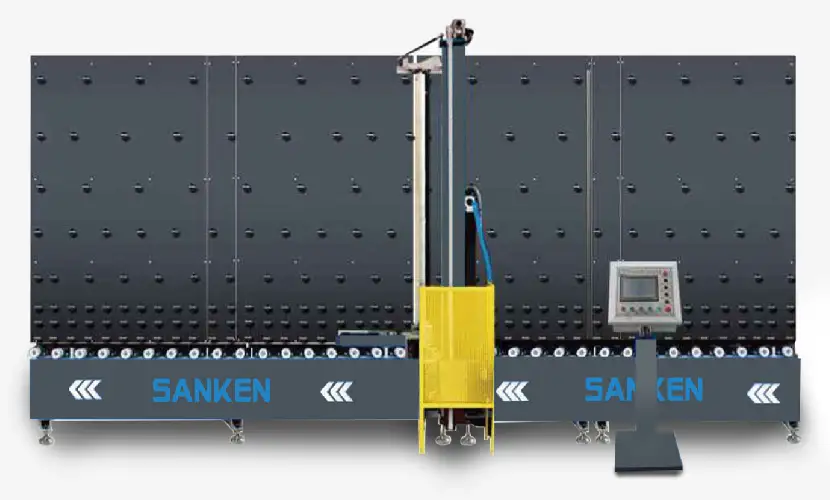
Automatic Low-E Glass Edge Deletion Machine – SKID Series
The SANKEN SKID series prepares Low-E glass edges for insulating glass production. PLC and touch-screen control coordinate servo-driven coating removal, while automatic coating-side identification and glass size detection support processing setup. Automatic pressure regulation, dust extraction and grinding wheel correction support routine production.
- Models: SKID-2000A and SKID-2500A.
- Maximum glass size: 2000 × 3000 mm or 2500 × 3500 mm.
- Minimum glass size: 300 × 400 mm.
- Glass thickness: 3–19 mm.
- Coating deletion speed: 0–25 m/min.
- Conveying speed: 45 m/min.
- Grinding wheel width: 10–20 mm.
- Automatic functions: Coating-side identification, size detection, grinding pressure regulation, dust extraction and wheel correction.
Automatic Low-E Glass Edge Deletion
SANKEN SKID series removes Low-E coating from the glass edge area before insulating glass assembly. Vertical glass handling, servo-controlled movement and automatic coating-side identification support edge preparation within an IG production workflow.
Choose SKID-2000A for glass up to 2000 × 3000 mm or SKID-2500A for glass up to 2500 × 3500 mm. Both models process glass 3–19 mm thick and combine automatic glass size detection, grinding pressure regulation, dust extraction and grinding wheel correction.
Main Features
PLC and Touch-Screen Operation
The PLC control system and touch-screen interface provide access to processing settings and machine operation. Operators can set the coating deletion process for the glass and edge-preparation requirements.
Servo Movement and Linear Guides
Servo-controlled movement works with linear guide positioning to guide the coating removal mechanism along the glass edge. The vertical arrangement supports glass conveying and connection with downstream washing equipment.
Coating-Side Identification and Size Detection
The machine automatically identifies the coated surface of Low-E glass and detects glass dimensions. These functions support the positioning of the removal process on the required surface.
Rectangular and Shaped Glass Processing
The SKID series supports coating deletion on rectangular and shaped Low-E glass. Send the proposed panel outlines and dimensions so we can confirm the required processing configuration.
Automatic Grinding Pressure Regulation
The pressure regulation system adjusts grinding wheel pressure during coating removal. Set the operating conditions for the selected coating, wheel and required edge preparation.
Automatic Dust Extraction
The dust extraction system collects dust generated in the coating deletion area during processing. Maintain the collection system and filters as part of routine machine care.
Automatic Grinding Wheel Correction
The wheel correction system corrects changes in wheel shape caused by use, helping maintain the grinding profile for subsequent processing. Include wheel condition checks and correction in the maintenance routine.
Technical Specifications
| Parameter | SKID-2000A | SKID-2500A |
|---|---|---|
| Max. Processing Size | 2000 × 3000 mm | 2500 × 3500 mm |
| Min. Processing Size | 300 × 400 mm | 300 × 400 mm |
| Glass Thickness | 3–19 mm | 3–19 mm |
| Conveying Speed | 45 m/min | 45 m/min |
| Coating Deletion Speed | 0–25 m/min | 0–25 m/min |
| Grinding Wheel Width | 10–20 mm | 10–20 mm |
| Air Pressure | 0.7–0.8 MPa | 0.7–0.8 MPa |
| Total Power | 15 kW | 15 kW |
| Machine Dimensions (L × W × H) | 7950 × 2100 × 2900 mm | 8750 × 2100 × 3400 mm |
| Machine Weight | 3000 kg | 3500 kg |
Conveying speed and coating deletion speed describe different machine movements. Finished-panel output depends on glass dimensions, edge length, coating type, processing settings and handling time.
The grinding wheel width is 10–20 mm. Confirm the required coating removal width and selected wheel configuration when specifying the machine.
Low-E Edge Preparation for IGU Production
Where a Low-E coating requires edge deletion, the SKID machine prepares the perimeter before the glass enters the insulating glass assembly process. Select the removal width and process settings to suit the coating, spacer position and sealing system.
1. Load and Identify the Glass
Feed the Low-E panel into the vertical machine. Coating-side identification and size detection establish the processing orientation and panel dimensions.
2. Remove the Required Edge Coating
The servo-controlled mechanism follows the required edge path while the grinding wheel removes the coating. Automatic pressure regulation supports the selected grinding conditions, and dust extraction collects processing dust.
3. Wash and Inspect
Convey the processed glass to the washing and drying stage. Inspect the prepared edge area and glass condition before spacer positioning and assembly.
4. Continue IGU Assembly
The cleaned panel proceeds to spacer frame positioning, assembly, gas filling where required, pressing and secondary sealing on the appropriate downstream equipment.
Model Selection
SKID-2000A
Handles glass from 300 × 400 mm up to 2000 × 3000 mm. Machine dimensions are 7950 × 2100 × 2900 mm, with a machine weight of 3000 kg.
SKID-2500A
Handles glass from 300 × 400 mm up to 2500 × 3500 mm. Machine dimensions are 8750 × 2100 × 3400 mm, with a machine weight of 3500 kg.
Both models have a glass thickness range of 3–19 mm, a coating deletion speed of 0–25 m/min and a total power of 15 kW. Select the model around your largest glass dimensions, coating requirements and available factory space.
IG Production-Line Integration
Arrange coating deletion before glass washing and drying so the prepared panels can continue to spacer positioning and IGU assembly. Match conveying direction, working height, processing size and handling requirements when connecting the equipment.
This IG factory arrangement shows how the main line, sealing equipment and auxiliary workstations can be planned together. The SKID installation position and working space are determined separately for the selected model and coating deletion workflow.
Provide compressed air at 0.7–0.8 MPa and an electrical supply suitable for a 15 kW machine. Allow access for glass loading, wheel changes, dust collection servicing and routine maintenance. Machine dimensions do not include all operating aisles or surrounding handling space.
Frequently Asked Questions
What does the SKID machine remove?
It removes the Low-E coating from the required glass edge area before insulating glass assembly. The operation prepares the edge coating area for the selected IGU manufacturing process.
Which models are available?
SKID-2000A processes glass up to 2000 × 3000 mm, and SKID-2500A processes glass up to 2500 × 3500 mm. Both models handle glass from 300 × 400 mm and thicknesses of 3–19 mm.
Does it identify the coated side automatically?
Yes. The machine includes automatic Low-E coating-side identification and automatic glass size detection.
Can it process shaped Low-E panels?
The series supports rectangular and shaped glass. Send the panel outlines, dimensions and coating details to confirm the processing requirements for your shapes.
How is grinding wheel pressure controlled?
An automatic pressure regulation system adjusts wheel pressure during the coating deletion process.
Does the machine include dust collection?
Yes. Automatic dust extraction collects dust generated during coating removal. Filters and extraction components require routine inspection and maintenance.
Can it connect to an insulating glass line?
Yes. Plan the coating deletion stage before washing and drying, then coordinate its connection with the main IG line according to the required glass flow and production arrangement.
What information should I send for a quotation?
Send maximum and minimum glass dimensions, thickness range, coating type, required removal width, panel shapes, target output, existing line details and a factory layout.
Discuss Your Low-E Glass Processing Requirements
Send SANKEN your Low-E glass specifications and production requirements. We can help select the SKID model and plan its connection with washing and insulating glass assembly equipment.
SANKEN Glass Machinery is a Guangzhou-based manufacturer and international supplier of glass-processing machinery and complete production-line solutions.
Contact Us
Contact: Dalia Qiu
Tel: +86 15994813914
Landline: +86-20-82347228
Email: sales@sankenglass.com
WhatsApp: +86 15994813914
ADD: No.2, Xinghai Road, Lanhe, Nansha District, Guangzhou City, China. P.C 511480