Please fill out the form below to request a quote or to request more information about us. please be as detailed as possible in your message, and we will get back to you as soon as possible with a response. we're ready to start working on your new project, contact us now to get started.
Exporting glass-processing machinery since 2002, with international project support from planning to installation and training.
Why Your Glass Molding Machine Choice Impacts Production Costs
2026-08-07
SANKEN
41
Glass molding machines play a critical role in the production of high-precision glass optics and components. The choice of the right glass molding machine can significantly impact production costs, efficiency, and overall quality. This article explores how different types of glass molding machines affect production costs and highlights the importance of selecting the most suitable equipment for your manufacturing needs.
Introduction
Glass molding machines are essential in producing precision glass optics used in various industries such as laser technology, medical devices, digital imaging, automotive, and sensor systems. These machines heat and mold glass blanks into precise optical components by using ultra-precise molds. The quality and efficiency of these machines directly influence the production process and, consequently, the overall production costs.
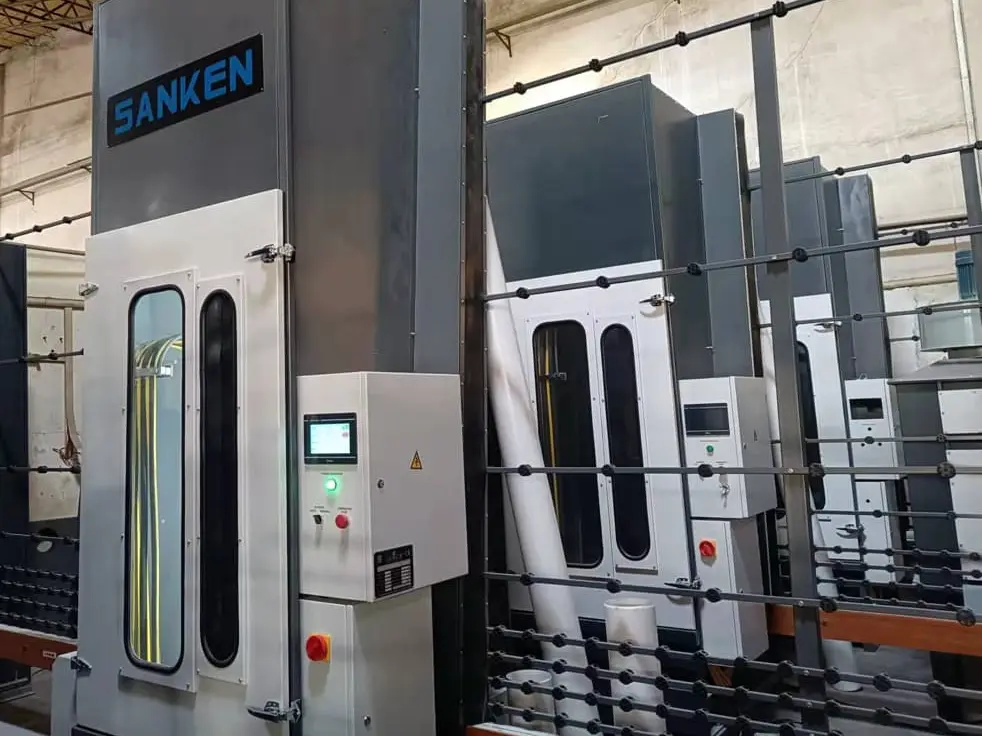
Types of Glass Molding Machines
Manual Machines
Manual glass molding machines are typically simpler and less automated compared to their semi-automatic and fully automatic counterparts. They often require manual intervention for loading, unloading, and adjusting the molds.
Key Features:- Controlled Heating: Manual machines heat and mold glass blanks manually, making them suitable for small-scale production.
- Precision Molding: Manual machines offer high precision but are limited in the number of components they can produce in a given time.
- Limitations: Manual machines are time-consuming and may not be suitable for large-scale production due to their limited throughput and increased labor costs.
Semi-Automatic Machines
Semi-automatic glass molding machines combine manual and automated functions, providing a balance between automation and manual control. These machines often have automated heating and mold alignment processes but may require manual loading and unloading.
Key Features:- Hybrid Functionality: Semi-automatic machines offer a middle ground between manual and fully automated machines, combining some automation with manual operation.
- Moderate Throughput: They provide moderate throughput but are more flexible than fully manual machines.
- Production Flexibility: They can handle various production scenarios, making them suitable for medium-scale production.
Fully Automatic Machines
Fully automatic glass molding machines are designed for high-throughput production. They automate the entire process, from heating and loading the glass blanks to cooling and unloading the finished components.
Key Features:- High Throughput: Fully automated machines can produce a large number of components quickly, making them ideal for high-volume production.
- Modular Design: They often feature modular designs that can be scaled up or down based on production needs.
- Reduced Labor Costs: They reduce labor costs significantly by minimizing manual intervention.
- Higher Precision and Consistency: Advanced software and automation ensure high precision and consistency in production.
Impact on Production Costs
Choosing the right glass molding machine can have a profound impact on production costs. Let's explore how different types of machines influence costs in various ways.
Scalability and Efficiency
Scalability
- Manual Machines: Manual machines are limited in scalability due to their reliance on manual labor. As production volume increases, more labor is required, which drives up labor costs.
- Semi-Automatic Machines: Semi-automatic machines offer moderate scalability, but they still require manual intervention for some processes, limiting overall throughput.
- Fully Automatic Machines: Fully automatic machines are highly scalable and can easily increase production volume by adding more modules or lines. This makes them ideal for high-volume production.
Efficiency
- Cycle Time: Fully automatic machines have shorter cycle times compared to manual and semi-automatic machines, leading to higher throughput and reduced production times.
- Energy Consumption: Modern fully automatic machines are designed to be energy-efficient, reducing energy costs over time.
- Consistency: Automated machines produce consistent results, reducing the need for rework and improving overall quality.
Maintenance and Operational Costs
Maintenance Costs
- Manual Machines: Manual machines may require more frequent maintenance due to their mechanical nature and greater reliance on manual operations.
- Semi-Automatic Machines: Semi-automatic machines also require regular maintenance but may have higher maintenance costs than fully automatic machines due to their hybrid nature.
- Fully Automatic Machines: Fully automatic machines are designed for longevity and require less frequent maintenance. Advanced sensors and monitoring systems help detect and prevent issues before they become major problems.
Operational Costs
- Labor Costs: Manual and semi-automatic machines require more labor, increasing labor costs significantly. Fully automatic machines reduce labor costs by minimizing manual intervention.
- Energy Consumption: Fully automatic machines are designed to be energy-efficient, reducing energy costs over time.
- Material Costs: Higher precision and reduced scrap rates in fully automatic machines can lead to lower material costs.
Case Studies and Examples
Real-World Examples
Small-Scale Production
In a small-scale production facility, a semi-automatic machine might be more suitable because it balances automation with necessary manual intervention. This setup ensures that production can be scaled up or down as needed, providing flexibility without incurring the high operational costs of fully automatic machines.
Large-Scale Production
A large-scale production environment typically benefits from fully automatic machines due to their high throughput and lower labor costs. For example, a company producing thousands of glass optics daily might deploy fully automatic machines to achieve consistent quality and high volume output. These machines can operate 24/7 with minimal human intervention, significantly reducing labor costs and increasing efficiency.
SANKEN Case Studies
SANKEN High-Performance Glass Molding Equipment
SANKEN's automatic glass molding equipment is renowned for its high precision and efficiency. SANKEN's machines offer advanced features such as precision molding, anti-wear coatings, and robust automation systems.
Key Features of SANKEN Machines:- Precision Molding: Capable of producing high-precision glass optics with complex geometries.
- Anti-Wear Coatings: Specialized in-house coatings ensure extended tool life despite high forming temperatures and forces.
- High Throughput: Modular design allows for easy scaling to meet changing production demands.
- Cost Reduction: Lower labor, energy, and material costs compared to manual and semi-automatic machines.
Case Study 1
Company: XYZ Optical ComponentsMachines Used: SANKEN High-Precision Automatic Molding EquipmentImpact:- Labor Costs: Reduced by 50% due to minimal manual intervention.
- Energy Consumption: Lowered by 20% through energy-efficient design.
- Quality: Consistent high quality with no need for rework.
- Production Volume: Increased by 30% due to higher throughput.
- Cost Savings: Estimated $100,000 annually in labor and energy savings.
Case Study 2
Company: ABC Medical DevicesMachines Used: SANKEN Fully Automatic Glass Molding MachinesImpact:- Throughput: Increased by 50% due to faster cycle times.
- Quality Control: High precision and consistency ensured with automated processes.
- Maintenance: Reduced maintenance costs through advanced monitoring systems.
- Cost Savings: Approximately $150,000 annually in labor, energy, and material costs.
Conclusion
Choosing the right glass molding machine is crucial for controlling production costs. Manual and semi-automatic machines offer flexibility but may not be as efficient as fully automatic machines, especially for high-volume production. Fully automatic machines from brands like SANKEN offer high precision, efficiency, and cost savings through reduced labor, energy, and material costs.
In summary:
- Manual Machines: Suitable for small-scale production with limited throughput.
- Semi-Automatic Machines: Ideal for medium-scale production with moderate scalability and operational costs.
- Fully Automatic Machines (SANKEN): Best for large-scale production with high throughput, consistency, and cost reduction.
By selecting the appropriate machine based on your specific production needs, you can achieve significant cost savings and operational efficiency. For detailed cost analysis and tailored solutions, contact SANKEN to assess your production requirements and optimize your glass molding process.
Table of Contents
- 3.1.1Scalability
- 3.1.2Efficiency
- 3.2.1Maintenance Costs
- 3.2.2Operational Costs
- 4.2.2Case Study 1
- 4.2.3Case Study 2
GET IN TOUCH WITH Us
recommended articles
SANKEN Glass Machinery is a Guangzhou-based manufacturer and international supplier of glass-processing machinery and complete production-line solutions.
Useful Links
Products
Contact Us
Contact: Dalia Qiu
Tel: +86 15994813914
Landline: +86-20-82347228
Email: sales@sankenglass.com
WhatsApp: +86 15994813914
ADD: No.2, Xinghai Road, Lanhe, Nansha District, Guangzhou City, China. P.C 511480
Copyright © 2026 Guangzhou Sanken Glass Machinery Co., Ltd.| Sitemap