Please fill out the form below to request a quote or to request more information about us. please be as detailed as possible in your message, and we will get back to you as soon as possible with a response. we're ready to start working on your new project, contact us now to get started.
Exporting glass-processing machinery since 2002, with international project support from planning to installation and training.
Glass Molding Machine vs. Plastic Injection Molding for Optical Parts
2026-08-02
SANKEN
21
Optical components play a vital role in various industries, from healthcare and electronics to automotive and aerospace. The manufacture of these components requires precision and high-quality standards, making choosing the right production method crucial. While plastic injection molding has long been a standard process for manufacturing optical parts, the advent of glass molding machines has opened up new possibilities. This article will compare the glass molding machine with plastic injection molding, focusing on their technical aspects, advantages, and suitability for high-refractive-index lenses and other advanced optical components.
Introduction
In the world of optical components, the choice of manufacturing process can significantly impact the quality, precision, and reliability of the final product. Two popular methods are glass molding machines and plastic injection molding. Each technology has its own set of advantages and limitations, making it essential to understand their differences to choose the best fit for your optical manufacturing needs.
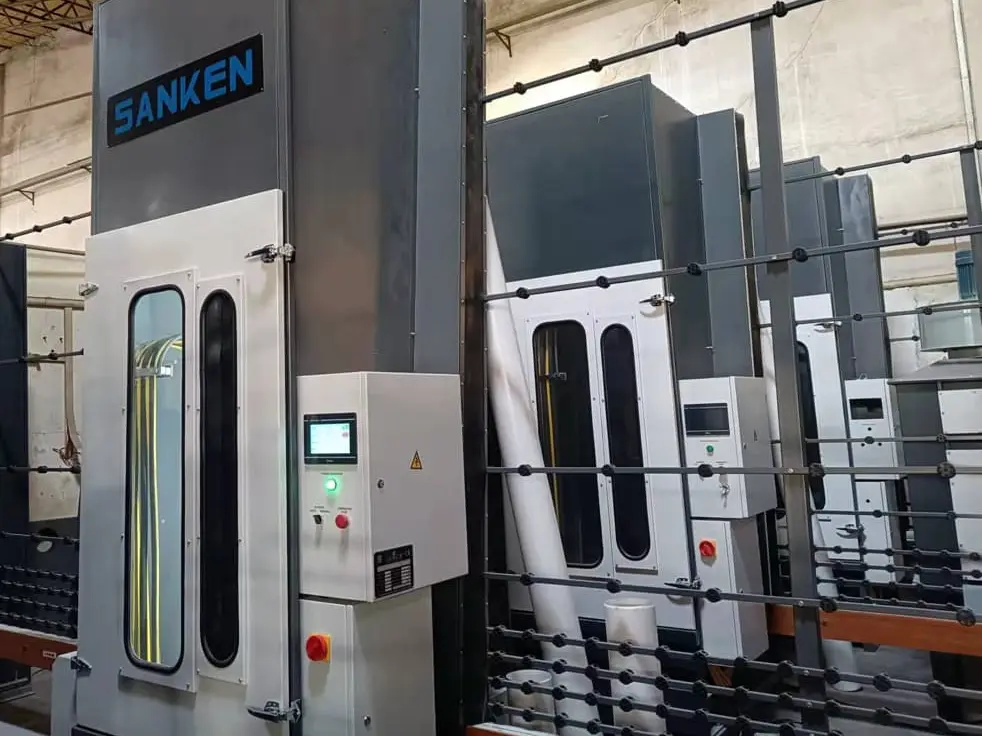
This article will delve into the details of glass molding machines and plastic injection molding, highlighting key aspects such as precision, cost, material quality, and suitability for various applications. We will focus on high-refractive-index lenses and other optical components to provide a clear comparison.
Glass Molding Machine: Definition and Background
Glass molding machines are designed to shape and form glass into precise optical components. The process involves heating glass in a mold and applying pressure to achieve the desired structure and optical properties. These machines are widely used in the production of lenses, prisms, filters, and other optical elements.
Advantages of Glass Molding Machines
High Precision and Quality:Glass molding machines offer unparalleled precision and consistent quality. The process ensures that each component is formed to exact specifications, reducing variability and enhancing uniformity. This is critical for applications requiring high precision, such as high-refractive-index lenses used in advanced optical systems.
Suitability for High-Refractive-Index Lenses:High-refractive-index lenses require exceptional material properties and precise optical performance. Glass molding machines excel in producing these lenses, ensuring that the final products meet stringent quality standards. The ability to achieve uniform refraction and transmission characteristics in glass lenses is unmatched by traditional plastic injection molding.
Superior Optical Properties:Glass is inherently more stable and has superior optical properties compared to plastic. Glasses can form lenses with lower loss of light and higher optical transmission, making them ideal for applications where high transparency and clarity are essential. Additionally, glass lenses have greater resistance to thermal and mechanical stresses, ensuring long-term reliability.
Best Practices and Applications
To maximize the benefits of glass molding machines, it is essential to follow best practices during the manufacturing process:
- Material Selection:
- Choose high-quality glass materials with the necessary optical properties for your specific application.
Consider the refractive index, thermal stability, and mechanical strength of the glass.
Process Control:
- Monitor temperature and pressure parameters closely during molding to maintain consistency.
Use advanced control systems to adjust settings in real-time based on process data.
Testing and Quality Assurance:
- Perform thorough testing of finished components to ensure compliance with industry standards and specifications.
Implement quality control measures to identify any defects or deviations from the desired optical properties.
Advanced Technologies:
- Utilize advanced technologies such as CAD/CAM for precise mold design and simulation.
- Incorporate robotics and automation to enhance the precision and efficiency of the molding process.
Technical Specifications: SANKEN Glass Molding Machine Example
SANKEN is a leading manufacturer of glass molding machines, known for its precision and reliability. Here are some technical specifications of a typical SANKEN glass molding machine:
| Feature | Specification |
|---|---|
| Machine Type | Glass Molding Machine |
| Standard Component | High Precision Mold |
| Gauge Control | Infrared Trough IR or X-ray Gauging |
| Temperature Control | Infrared Thermal Control |
| Pressure Control | Closed-loop Hydraulic System |
| Speed Control | Programmable Speed Control |
| Precision | 0.005mm (max. 0.001mm) |
| Material Capacity | Various Glass Types |
| Compatibility | High-Refractive-Index Lenses, Pure Optical Glass Components |
| Maintenance | Robust Maintenance Schedule |
| Automation | Fully Automated Operation |
| Integration | Seamless Integration with Manufacturing Line |
SANKEN's glass molding machines are designed to meet the high standards required for optical manufacturing. The specifications reflect the precision, reliability, and versatility of these machines, making them a preferred choice for high-quality optical component production.
Plastic Injection Molding: Definition and Background
Plastic injection molding is a widely used process for manufacturing plastic components, including optical parts. The process involves injecting molten plastic into a mold cavity, allowing it to cool and solidify, and then ejecting the finished part. Plastic injection molding is known for its flexibility, cost-effectiveness, and rapid production capabilities.
Advantages of Plastic Injection Molding
Cost-Effectiveness:One of the primary advantages of plastic injection molding is its cost-effectiveness. The process typically requires lower tooling costs compared to glass molding, making it a viable option for small and medium-sized batches. Additionally, the rapid production cycles allow for efficient manufacturing of multiple components simultaneously, reducing overall production time and costs.
Flexibility and Versatility:Plastic injection molding offers tremendous flexibility in designing and manufacturing components. The process can accommodate a wide range of plastic materials, enabling the production of parts with different mechanical, thermal, and optical properties. This versatility makes it suitable for various applications, from simple optical parts to complex multi-component assemblies.
Rapid Prototyping:Another key advantage of plastic injection molding is the ability to produce rapid prototypes. The process allows for quick iterations of designs, enabling manufacturers to test and refine their components before full-scale production. This can speed up the development cycle and improve product quality.
Limitations and Challenges
While plastic injection molding offers several advantages, it also has limitations that may impact the quality and performance of optical components:
Lower Precision and Consistency:Plastic injection molding may not achieve the same level of precision and consistency as glass molding machines. The variability in the plastic material and the injection process can result in minor deviations in the final product. This can be critical for high-precision applications, such as those requiring high-refractive-index lenses.
Optical Properties:Plastics generally have inferior optical properties compared to glass. They may exhibit lower light transmission and higher absorption rates, affecting the overall performance of the optical components. While advanced plastics can come close to glass in some properties, they often do not match the stability and transparency of glass.
Longevity and Durability:Plastic components can degrade or deform over time under thermal or mechanical stresses, affecting their reliability and longevity. This is particularly significant for applications where the optical component needs to maintain its integrity over extended periods.
Comparison Summary
To better understand the differences between glass molding machines and plastic injection molding, let's compare their key features and suitability for various optical components.
Technical Comparison Table
| Feature | Glass Molding Machine | Plastic Injection Molding |
|---|---|---|
| Material | Glass | Plastic |
| Precision | High, 0.005mm (max. 0.001mm) | Moderate, can vary depending on process control |
| Consistency | High, minimal deviation from mold specifications | Moderate, slight variations possible |
| Process Speed | Usually slower due to precise control | Faster, rapid production cycles |
| Cost-Effectiveness | Higher initial setup cost, lower ongoing cost | Lower initial setup cost, higher ongoing cost |
| Suitability for High-Refractive-Index Lenses | Excellent, unmatched precision and optical properties | Good, but may not match glass in properties |
| Longevity | High, stable under thermal and mechanical stress | Lower, can degrade over time |
Advantage Chart (Feature Comparison)
Precision and Quality
- Glass Molding Machine:
- Advantages: Unmatched precision, consistency, and high quality.
Challenges: Higher initial setup costs and slower production cycles.
Plastic Injection Molding:
- Advantages: Lower precision, but faster production cycles and lower tooling costs.
- Challenges: Moderate precision, variability in final product dimensions.
Cost-Effectiveness
- Glass Molding Machine:
- Advantages: Lower ongoing costs and higher quality production.
Challenges: Higher initial setup costs.
Plastic Injection Molding:
- Advantages: Lower initial setup costs and rapid production cycles.
- Challenges: Higher ongoing costs and moderate precision.
Suitability for High-Refractive-Index Lenses
- Glass Molding Machine:
- Advantages: Excellent suitability for high-refractive-index lenses with unmatched precision and optical properties.
Challenges: Higher initial setup costs and slower production cycles.
Plastic Injection Molding:
- Advantages: Good suitability with lower tooling costs and rapid production cycles.
- Challenges: May not match glass in optical properties and longevity.
Suitability for Specific Optical Components
| Optical Component | Recommended Technology | Reasoning |
|---|---|---|
| High-Refractive-Index Lenses | Glass Molding Machine | Required optical properties and precision |
| Low-Refractive-Index Lenses | Plastic Injection Molding | Cost-effective solution for basic optical parts |
| Complex Optical Assemblies | Plastic Injection Molding | Flexibility in design and rapid prototyping |
| Thermal and Mechanical Stress Components | Glass Molding Machine | Superior stability and durability |
Conclusion
In summary, the choice between glass molding machines and plastic injection molding for optical parts depends on specific requirements and applications.
For applications requiring high precision and superior optical properties, especially high-refractive-index lenses, glass molding machines are the ideal choice. SANKEN's glass molding machines offer unparalleled precision, consistency, and reliability, making them a preferred option for demanding optical component manufacturing.
On the other hand, plastic injection molding provides a more flexible and cost-effective solution for general-purpose optical parts. While it may not match the precision and longevity of glass molding, it offers rapid prototyping and design flexibility, making it suitable for a wide range of applications.
By understanding the unique advantages and limitations of each technology, manufacturers can make informed decisions for their optical component production needs. Whether you are focusing on precision and quality with glass molding or cost-effectiveness and flexibility with plastic injection molding, the right choice will depend on your specific requirements and goals.
Recommendations for Choosing the Right Technology:- For High-Precision and Advanced Optical Components: Consider glass molding machines, especially if you need high-refractive-index lenses with superior optical properties and long-term stability.
- For General Optical Parts and Rapid Prototyping: Consider plastic injection molding for its cost-effectiveness and design flexibility, especially for simpler optical components and applications where moderate precision is sufficient.
Contact SANKEN for more detailed technical support and exploration of their glass molding machines, specifically designed for high-precision optical component production.
Summary:
- Glass Molding Machines: High precision, consistency, and superb optical properties.
- Plastic Injection Molding: Cost-effective, flexible, and suitable for rapid prototyping.
- The choice depends on your specific needs, whether it be precision, cost-effectiveness, or rapid prototyping.
Table of Contents
- 4.2.2Cost-Effectiveness
- 5.1Summary:
GET IN TOUCH WITH Us
recommended articles
SANKEN Glass Machinery is a Guangzhou-based manufacturer and international supplier of glass-processing machinery and complete production-line solutions.
Useful Links
Products
Contact Us
Contact: Dalia Qiu
Tel: +86 15994813914
Landline: +86-20-82347228
Email: sales@sankenglass.com
WhatsApp: +86 15994813914
ADD: No.2, Xinghai Road, Lanhe, Nansha District, Guangzhou City, China. P.C 511480
Copyright © 2026 Guangzhou Sanken Glass Machinery Co., Ltd.| Sitemap