Please fill out the form below to request a quote or to request more information about us. please be as detailed as possible in your message, and we will get back to you as soon as possible with a response. we're ready to start working on your new project, contact us now to get started.
Exporting glass-processing machinery since 2002, with international project support from planning to installation and training.
Understanding the Key Difference Between a Glass Molding Machine and a Blowing Machine
2026-09-10
SANKEN
25
In the world of glass manufacturing, the choice between a glass molding machine and a glass blowing machine can significantly impact the quality, efficiency, and cost-effectiveness of your production process. This article aims to demystify the differences between these two technologies, helping you make an informed decision based on your specific needs and applications.
Introduction
Glass manufacturing is a complex process that requires precision, efficiency, and consistency. Understanding the nuances between different types of glass manufacturing machines can lead to substantial improvements in your production capabilities. This article focuses on comparing glass molding machines with glass blowing machines, highlighting their key differences, benefits, and the factors to consider when choosing the right one for your business. We will also emphasize the advantages of SANKEN's glass molding machine, particularly for bottle manufacturing.
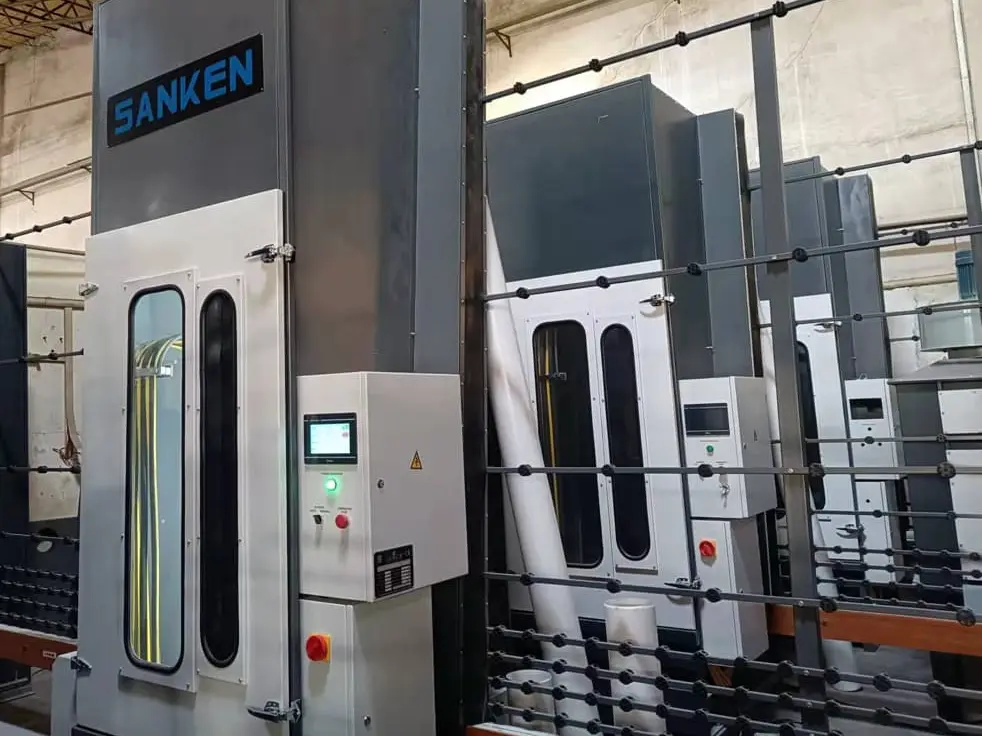
Overview of Glass Molding Machine
Definition and Basic Functionality
A glass molding machine is a specialized piece of equipment used to mold glass into specific shapes and dimensions. Unlike glass blowing, which involves blowing air into a molten glass bubble to create a hollow shape, a glass molding machine uses molds to form the glass into precise shapes. The process typically involves heating the glass to a viscous state and then pressing it into molds to achieve the desired form.
Advantages and Key Benefits:
Precision and Accuracy:
Glass molding machines produce highly accurate and consistent parts, ensuring uniformity in dimensions and appearance. This precision is particularly beneficial for manufacturing complex shapes and intricate designs.Production Speed:
Glass molding machines can produce parts much faster than blowing machines. The automated process allows for rapid cycles, reducing the time needed for each piece to be formed.Cost-Effectiveness:
Despite the initial investment in equipment, the cost of production using a glass molding machine can be lower in the long run due to the reduced labor costs and increased efficiency.Automation:
Glass molding machines are highly automated, which decreases the need for manual operations and reduces the risk of errors caused by human intervention.Versatility:
These machines can be used to produce a wide range of glass products, from simple bottles to intricate decorative items. SANKEN's glass molding machines are renowned for their versatility and ability to adapt to various production needs.
Benefits of SANKEN Glass Molding Machines for Bottles
SANKEN's glass molding machines are designed with specific advantages in mind, especially for bottle manufacturing:
- High-Quality Outputs:
SANKEN machines ensure high-quality bottle production with consistent dimensions and superior durability.
Durability:
The robust design of SANKEN machines helps maintain consistent production quality over time, reducing downtime and maintenance costs.Ease of Use:
User-friendly controls and automated features make it easy for operators to manage production processes efficiently.
Overview of Glass Blowing Machine
Definition and Basic Functionality
A glass blowing machine, also known as a glassblowing machine, is a traditional method used to create hollow glass objects such as bottles, jars, and vases. This process involves blowing air into a molten glass bubble to shape it into a desired form. The glassblowing machine typically consists of a furnace, where the glass is heated to a malleable state, and a mechanism to facilitate the blowing and shaping process.
Advantages and Key Benefits:
Artistic Flexibility:
Glassblowing machines offer a high degree of artistic flexibility, making them ideal for creating unique and customized pieces. This is especially useful for traditional industries that emphasize handcrafted artistry.Smooth Surfaces:
Blown glass typically has smoother surfaces compared to molded glass, which can be beneficial for certain aesthetic requirements.Customization:
The handblowing process allows for greater customization, enabling artisans to create intricate designs and shapes that are more challenging with mechanized processes.
Real-World Applications
Glassblowing machines are often used in industries that value artistic expression and customization. They are commonly found in decorative glass manufacturing, where the ability to create unique shapes and designs is essential.
Comparing Glass Molding and Blowing Machines
Head-to-Head Comparison
To better understand the differences between glass molding machines and glass blowing machines, let's compare them based on key factors such as precision, production speed, and cost-effectiveness.
Table: Comparison of Glass Molding and Blowing Machines
| Feature | Glass Molding Machine | Glass Blowing Machine |
|---|---|---|
| Precision and Accuracy | High precision, consistent results | Lower precision, higher variability |
| Production Speed | Very fast cycles, high throughput | Slower cycles, lower throughput |
| Artistic Flexibility | Limited artistic customization | High flexibility for custom designs |
| Surface Quality | Slightly rougher surfaces, more uniform | Smooth surfaces, more delicate |
| Initial Cost | Higher initial investment, lower long-term cost | Lower initial investment, higher long-term cost |
| Ease of Operation | Automated processes, fewer manual interventions | Manual operations required, higher labor costs |
| Durability of Products | Consistent quality, longer shelf life | Potentially inconsistent quality, lower durability |
Real-World Scenarios
- Bottle Manufacturing:
Molding Machine: Ideal for high-volume production of uniform bottles. Perfect for beverages, pharmaceuticals, and household products where consistency is crucial.
Blowing Machine: Suitable for smaller batches or custom-designed bottles. Best for decorative bottle manufacturing or artisanal products where handcrafted appearance is desired.
How They Operate Differently in Real-World Scenarios
- Volume and Quality Control:
- Molding machines excel in mass production, ensuring consistent quality and reducing variability. They can handle larger volumes with fewer issues.
Blowing machines, while slower, offer more artistic flexibility, making them suitable for small batch production or highly customized products.
Automation vs. Manual Labor:
- Glass molding machines are highly automated, reducing manual labor needs and minimizing errors caused by human intervention.
- Glass blowing machines often require skilled labor, with artisans playing a significant role in the shaping and finishing of each piece.
Choosing Between Molding and Blowing Machines
Factors to Consider
When deciding between a glass molding machine and a glass blowing machine, consider the following factors:
- Production Volume:
- High-volume production is more cost-effective with glass molding machines due to their higher production speed and automation capabilities.
Smaller batches may benefit more from glass blowing machines due to the flexibility and customization they offer.
Product Type:
- For standardized products such as bottles, jars, and containers, molding machines are generally more suitable.
Customized or unique products benefit more from blowing machines, especially when artistic flexibility is a priority.
Automation Needs:
- If your operations require high levels of automation, a glass molding machine is the way to go. They can handle large volumes with minimal manual intervention.
- If manual craftsmanship is paramount, a glass blowing machine aligns better with your needs.
Advantages of SANKEN Glass Molding Machine for Bottles
SANKEN's glass molding machines offer several advantages over traditional glass blowing machines, especially for bottle production:
High-Quality Outputs: SANKEN machines produce bottles of consistent quality, with uniform dimensions and superior durability. This ensures that your products meet high standards of quality and consistency.
Cost-Effective: While the initial investment may be higher, SANKEN's machines offer lower long-term costs due to their high efficiency and reduced labor needs.
User-Friendly Controls: SANKEN machines come with intuitive controls, making them easy to operate and maintain. This ease of use helps in streamlining production processes and reducing training time for operators.
Practical Tips on How to Choose
Evaluate Specific Needs: Consider the specific requirements of your business. If you need high-volume production with consistent quality, a glass molding machine is likely the better choice. For smaller batches or custom designs, a glass blowing machine might be more suitable.
Consult an Expert: Reach out to SANKEN or another manufacturer for a consultation to assess your needs and receive tailored advice. They can provide insights based on their expertise and industry knowledge.
Prototype Testing: Consider creating prototypes with both types of machines to evaluate the quality and feasibility of your products before making a final decision.
Conclusion
Understanding the key differences between glass molding machines and glass blowing machines is crucial for making an informed decision that aligns with your specific production needs. While glass molding machines offer high precision, speed, and cost-effectiveness, glass blowing machines excel in artistic flexibility and custom designs. For bottle manufacturers, SANKEN's glass molding machines provide a compelling solution with their high-quality outputs, cost-effectiveness, and ease of use.
In summary, when choosing between a glass molding machine and a glass blowing machine, consider factors such as production volume, product type, and automation needs. SANKEN's glass molding machines stand out as a top choice, especially for those looking to achieve high-quality, consistent outputs at a lower long-term cost.
We hope this article has provided you with valuable insights to help you make an informed decision. If you have further questions or need assistance with your glass manufacturing needs, feel free to reach out to SANKEN for expert advice and support.
Table of Contents
- 4.1.2Real-World Scenarios
GET IN TOUCH WITH Us
recommended articles
SANKEN Glass Machinery is a Guangzhou-based manufacturer and international supplier of glass-processing machinery and complete production-line solutions.
Useful Links
Products
Contact Us
Contact: Dalia Qiu
Tel: +86 15994813914
Landline: +86-20-82347228
Email: sales@sankenglass.com
WhatsApp: +86 15994813914
ADD: No.2, Xinghai Road, Lanhe, Nansha District, Guangzhou City, China. P.C 511480
Copyright © 2026 Guangzhou Sanken Glass Machinery Co., Ltd.| Sitemap