Please fill out the form below to request a quote or to request more information about us. please be as detailed as possible in your message, and we will get back to you as soon as possible with a response. we're ready to start working on your new project, contact us now to get started.
Exporting glass-processing machinery since 2002, with international project support from planning to installation and training.
How Automation in Glass Molding Machines is Revolutionizing Glass Manufacturing
2026-07-24
SANKEN
25
The manufacturing industry is constantly evolving, with advancements in technology driving innovation and efficiency. One sector that has seen significant transformations is glass manufacturing, particularly with the advent of automated glass molding machines. This article explores how automation in glass molding machines, especially those from SANKEN, is revolutionizing the glass manufacturing process, offering unparalleled precision, efficiency, and cost-effectiveness.
Introduction
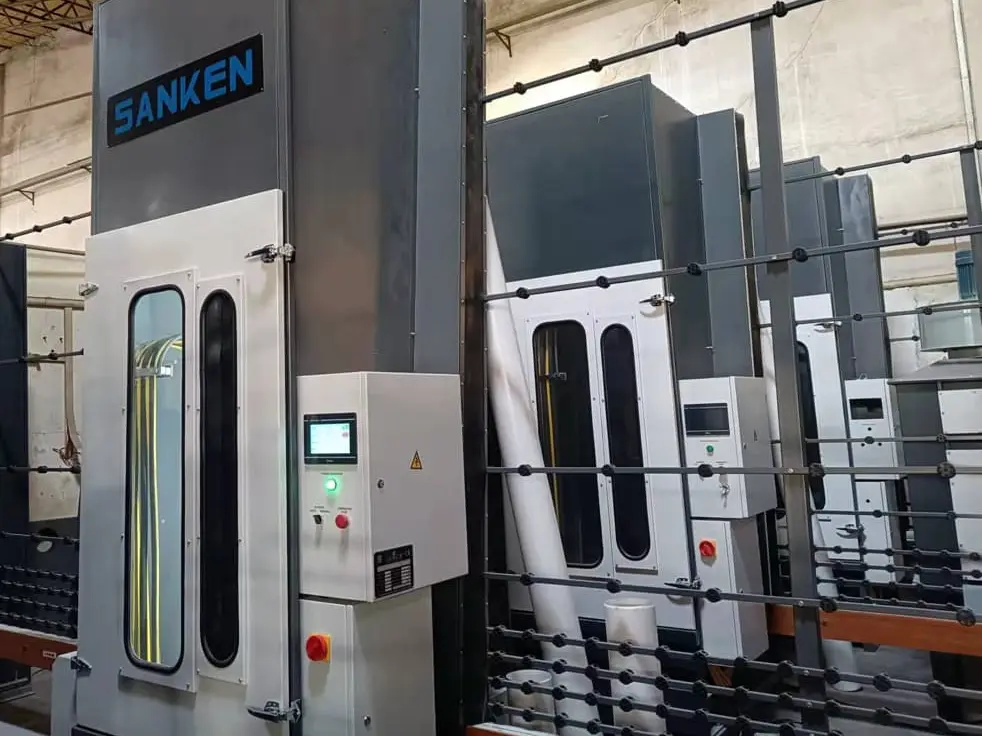
Glass molding machines have come a long way since their inception, evolving from simple manual processes to sophisticated, automated systems designed to enhance precision and productivity. Automation has played a pivotal role in this evolution, with innovations such as the SANKEN intelligent glass molding system leading the way. SANKEN, a leading manufacturer of glass molding machines, has developed cutting-edge technologies that not only increase production speed but also ensure consistent quality and reliability.
Historical Context
Evolution of Glass Manufacturing
Historically, glass manufacturing relied heavily on manual processes that were labor-intensive and time-consuming. Traditional methods involved melting and shaping glass using molds and manual labor. While these methods were effective, they were prone to human error and could not achieve the level of precision required for modern applications. As technology progressed, manufacturers began to explore automated solutions to streamline the process and improve efficiency.
Precision Glass Molding (PGM)
One of the most significant advancements in glass manufacturing is Precision Glass Molding (PGM). This process involves heating and press-forming optical-grade glass blanks (preforms) using ultra-precise tooling to create intricate shapes and dimensions. SANKEN has been at the forefront of implementing PGM technology, offering state-of-the-art machines that enable rapid production of high-precision glass components.
SANKEN's Innovative Solutions
Introduction to SANKEN's Machines
SANKEN's intelligent glass molding systems are designed to meet the demands of modern glass manufacturing. These machines are equipped with advanced automation features that enhance precision, reduce waste, and increase productivity. SANKEN's systems are known for their reliability, consistency, and user-friendly interface, making them the go-to choice for manufacturers seeking to optimize their production processes.
Key Features
High-Speed Automation
One of the core features of SANKEN's machines is high-speed automation. These machines can operate at significantly higher speeds compared to traditional manual systems, reducing production time and increasing throughput. The high-speed capability ensures that manufacturers can produce large volumes of glass components efficiently, meeting the demands of mass production.
Precision Molding
Precision is critical in glass manufacturing, and SANKEN's machines excel in this aspect. The machines utilize advanced tooling and molding processes to achieve exceptional precision, ensuring that each component meets strict tolerances. This level of precision is crucial for applications in sectors such as laser technology and medical imaging, where even small deviations can affect performance.
Custom Tooling
SANKEN offers custom tooling options to meet specific manufacturing requirements. The ability to customize tooling allows manufacturers to produce a wide range of glass components with varying shapes, sizes, and specifications. This flexibility is particularly beneficial in industries where unique or specialized components are required.
Technical Specifications
Detailed Technical Overview
SANKEN's intelligent glass molding systems are equipped with a range of technical features that make them stand out in the market. The machines are designed with precision, durability, and efficiency in mind, ensuring optimal performance in various applications.
Machine Design
The SANKEN machines feature robust designs that can handle high temperatures and pressures during the molding process. The machines are built with corrosion-resistant materials and advanced cooling systems to maintain consistent operating conditions.
Tooling Specifications
SANKEN provides detailed tooling specifications, including mold design, material selection, and surface finish. These specifications ensure that the molds are precise and capable of producing components with high-quality finishes. The tooling is designed to withstand repeated use and minimize maintenance requirements.
Cooling and Heating Systems
Efficient cooling and heating systems are essential for maintaining optimal molding conditions. SANKEN's machines are equipped with advanced cooling and heating systems that ensure the glass blanks are heated to the correct temperature and cooled uniformly, preventing defects and inconsistencies.
Table: Technical Specifications
| Feature | Specifications |
|---|---|
| High-Speed Automation | Capable of operating at speeds up to 100 cycles per minute |
| Precision Molding | Achieves tolerances within +/-0.005mm |
| Custom Tooling | Offers a range of customization options |
| Cooling System | Advanced cooling system for uniform cooling |
| Heating System | Precise temperature control up to 800C |
| Mold Material | High-temperature resistant alloys |
| Mold Surface Finish | Smooth, consistent surfaces |
| Material Compatibility | Suitable for various glass types |
Advantages of Automation
Improved Precision
Automation in glass molding machines ensures consistent precision, reducing the likelihood of human error. SANKEN's intelligent systems are capable of producing components with extremely tight tolerances, ensuring each piece meets the same high standards.
Reduced Per Unit Cost
One of the key advantages of automation is the ability to produce components at a lower per unit cost. SANKEN's machines can operate continuously, reducing labor costs and minimizing production downtime. The high-speed capability also increases throughput, further lowering costs.
Enhanced Flexibility
SANKEN's machines are highly flexible and can be adapted to produce a wide range of glass components. The custom tooling options allow manufacturers to switch between different types of components without significant downtime or maintenance. This flexibility is particularly valuable in industries where rapid prototyping and multiple product lines are common.
Consistency and Reliability
Automation ensures that each component produced is consistent and reliable. The machines maintain precise control over the molding process, from heating to cooling, ensuring that every component meets the desired specifications. This consistency is critical in industries where minor variations can affect overall performance.
Case Studies and Real-World Applications
Laser Technology
In the laser technology sector, precision is paramount. SANKEN's intelligent glass molding machines enable the production of high-precision optical components such as lenses and mirrors. These components are essential in laser systems, where even small deviations can affect beam quality and performance. Case studies have shown that SANKEN's machines produce lenses with superior part-to-part consistency, ensuring consistent performance across different batches.
Medical Technology
Medical devices often require high-precision components that can withstand rigorous testing and use. SANKEN's machines are used in the production of medical-grade glass components, such as diagnostic tools and imaging devices. The precision and consistency of these components contribute to the reliability and accuracy of medical equipment, improving patient outcomes.
Digital Imaging
In the digital imaging industry, the demand for high-quality lenses and optical components is constant. SANKEN's machines can produce lenses with complex shapes and designs, such as aspheric and bi-aspheric lenses, that optimize image quality and resolution. Case studies have demonstrated that SANKEN's machines can produce lenses with superior performance, reducing weight and improving overall system performance.
Automotive Sector
The automotive sector is another area where high-precision glass components are in demand. SANKEN's machines are used in the production of various glass components, including lenses for vehicle cameras and sensors. The high-speed and precision capabilities of these machines ensure that manufacturers can produce components that meet stringent requirements and standards in the automotive industry.
Sensor Systems
Sensor systems require precise optical components that can accurately measure and transmit data. SANKEN's machines produce lenses and other optical components with high repeatability and uniformity, enhancing the performance and reliability of sensor systems. The case studies demonstrate that SANKEN's machines can produce components with exceptional quality and repeatability, making them ideal for sensor applications.
Comparison with Traditional Methods
Efficiency Gains
When compared to traditional manual processes, automation in glass molding machines offers significant efficiency gains. Traditional methods often require extensive manual labor, resulting in longer production times and higher labor costs. SANKEN's machines, on the other hand, can operate continuously, producing components at a higher rate with minimal downtime.
Cost Savings
Automation leads to cost savings in various ways. The high-speed capability of SANKEN's machines reduces production time and labor costs, allowing manufacturers to produce components at a lower per unit cost. Additionally, the precision and consistency of these machines minimize waste and rework, further reducing costs.
Quality Improvement
Traditional methods are more susceptible to human error, leading to inconsistent quality and higher defect rates. In contrast, SANKEN's machines ensure that each component is produced with the same high standards, resulting in higher overall quality and consistency.
Future Trends and Innovations
Technological Advancements
The future of glass manufacturing is likely to see further advancements in automation and technology. SANKEN is at the forefront of these innovations, continually developing new features and capabilities to enhance their machines. Some of the emerging trends include the integration of artificial intelligence (AI) and machine learning (ML) to optimize production processes further.
Customization and Flexibility
Customization and flexibility will continue to be important in the glass manufacturing industry. SANKEN's machines are designed to be highly adaptable, allowing manufacturers to produce a wide range of components without significant downtime. This adaptability will be crucial in meeting the evolving needs of various industries.
Energy Efficiency
Energy efficiency is another future trend that will impact glass manufacturing. SANKEN's machines are designed with advanced cooling and heating systems that minimize energy consumption. Additionally, the high-speed capability reduces idle time, further enhancing overall energy efficiency.
Environmental Considerations
Environmental concerns will play a significant role in the future of glass manufacturing. SANKEN's machines are designed to minimize waste and reduce energy consumption, aligning with sustainable manufacturing practices. The company is committed to developing eco-friendly solutions that help manufacturers meet their environmental goals.
Summary
Conclusion
Automation in glass molding machines has revolutionized the glass manufacturing industry, offering unprecedented precision, efficiency, and cost-effectiveness. SANKEN's intelligent glass molding systems are at the forefront of this transformation, providing advanced features that enhance production processes. The high-speed capability, precision molding, and custom tooling options make SANKEN's machines the ideal choice for manufacturers seeking to optimize their production processes and achieve consistent quality.
Table of Contents
- 3.2Key Features
- 3.2.2Precision Molding
- 3.2.3Custom Tooling
- 4.1.1Machine Design
- 5.10Sensor Systems
- 6.2Cost Savings
- 8.Summary
- 8.1Conclusion
GET IN TOUCH WITH Us
recommended articles
SANKEN Glass Machinery is a Guangzhou-based manufacturer and international supplier of glass-processing machinery and complete production-line solutions.
Useful Links
Products
Contact Us
Contact: Dalia Qiu
Tel: +86 15994813914
Landline: +86-20-82347228
Email: sales@sankenglass.com
WhatsApp: +86 15994813914
ADD: No.2, Xinghai Road, Lanhe, Nansha District, Guangzhou City, China. P.C 511480
Copyright © 2026 Guangzhou Sanken Glass Machinery Co., Ltd.| Sitemap