Please fill out the form below to request a quote or to request more information about us. please be as detailed as possible in your message, and we will get back to you as soon as possible with a response. we're ready to start working on your new project, contact us now to get started.
Exporting glass-processing machinery since 2002, with international project support from planning to installation and training.
How Working Principle Affects Glass Tempering Machine Price and Performance
2026-08-13
SANKEN
10
Glass tempering machines play a crucial role in the production of durable and reliable tempered glass. The quality and efficiency of these machines significantly impact the performance and pricing of tempered glass in various industries. In this comprehensive guide, we will explore the intricate relationship between the working principle of glass tempering machines and their pricing and performance, with a focus on SANKEN convection heating glass tempering machines. This article aims to provide valuable insights for professionals and decision-makers in the glass industry.
Introduction
Glass tempering machines are essential tools in the glass manufacturing process, designed to strengthen glass by subjecting it to thermal or chemical treatments. Tempered glass is approximately four times stronger than regular glass and is widely used in industries such as construction, automotive, and consumer electronics for its enhanced durability and safety.
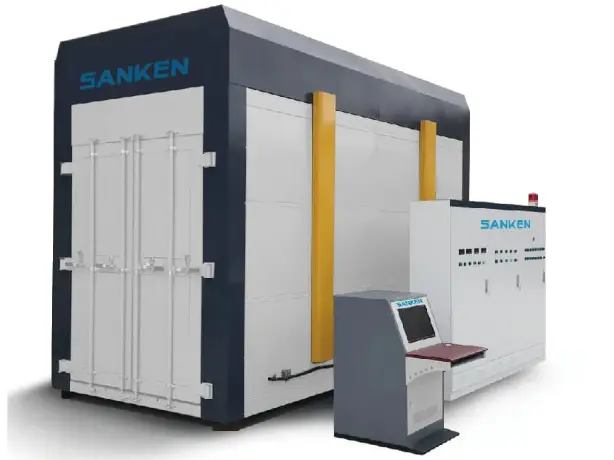
SANKEN, a leading brand in the glass machinery industry, offers a wide range of glass tempering machines known for their reliability, efficiency, and advanced technology. Understanding the working principles of these machines is crucial for evaluating their performance and pricing. This article will delve into the technical aspects of glass tempering machines, focusing on the impact of different working principles on their price and performance.
Working Principle Overview
Basic Principles of Glass Tempering
Glass tempering involves a complex process of heating and cooling the glass to alter its molecular structure and enhance its strength and durability. The two main methods of glass tempering are thermal tempering and chemical tempering, but this article will focus primarily on thermal tempering, as it is the most common and widely used method in the industry.
Thermal Tempering Process
The thermal tempering process consists of the following key steps:
Heating: The glass is heated uniformly to a temperature range of 590C to 640C, depending on the thickness and composition of the glass. The heating system plays a critical role in ensuring consistent and uniform heating across the entire surface of the glass.
Quenching: Once the glass reaches the desired temperature, it is rapidly cooled using a cooling system. The rapid cooling causes the outer surfaces of the glass to contract more quickly than the interior, creating a state of high compression. This compression is what gives tempered glass its enhanced strength and durability.
Heat Stabilization: After quenching, the glass undergoes heat stabilization to ensure consistent performance over time. This step is crucial to prevent stress points and ensure the long-term reliability of the tempered glass.
Components Affecting Price and Performance
Several key components of a glass tempering machine significantly influence its price and performance. These components include the heating system, cooling system, control system, and loading and unloading mechanisms. Each of these components plays a vital role in the overall functionality and efficiency of the machine.
Heating System
The heating system is one of the most critical components of a glass tempering machine. It is responsible for uniformly heating the glass to the optimal temperature for tempering. The type and efficiency of the heating system can greatly impact the machine's price and performance.
- Types of Heating Systems:
- Radiant Heating: This heating method uses infrared radiation to heat the glass uniformly. It is a simple and effective method but can be less efficient than convection heating.
- Convection Heating: SANKEN's convection heating system uses heated air to transfer energy to the glass, providing more uniform and consistent heating. This method is more efficient and reliable, resulting in better tempered glass quality.
Induction Heating: This method uses electromagnetic fields to heat the glass. It is more complex and expensive but offers high precision and efficiency.
Impact on Price:
- Radiant heating systems are generally less expensive but less efficient, resulting in lower overall machine prices.
- Convection heating systems, like those used in SANKEN machines, are more expensive due to their advanced technology and higher efficiency. However, they offer a more consistent and uniform heating process, leading to higher quality tempered glass.
- Induction heating systems are the most expensive but provide the highest precision and efficiency, making them ideal for high-volume production.
| Heating System | SANKEN Convection Heating | Radiant Heating | Induction Heating |
|---|---|---|---|
| Cost (USD) | High | Low | Very High |
| Efficiency | High | Low | Very High |
| Uniformity | Very High | Moderate | Very High |
| Quality | Very High | Moderate | Very High |
Cooling System
The cooling system is another crucial component that affects the machine's performance. It is responsible for rapidly cooling the glass to create the desired compression in the outer layers. The efficiency and precision of the cooling system directly impact the quality of the tempered glass and contribute to the machine's overall performance.
- Types of Cooling Systems:
- Air Cooling: This method uses a flow of cold air to cool the glass uniformly. It is a simple and effective cooling system but can be less efficient for larger or thicker glass pieces.
Water Cooling: This method uses a flow of cold water to cool the glass, providing more precise and consistent cooling. It is more efficient and reliable but also more expensive to implement.
Impact on Price:
- Air cooling systems are generally less expensive but less efficient, leading to lower overall machine prices.
- Water cooling systems are more expensive due to the additional infrastructure required for water circulation and filtration. However, they offer more precise and consistent cooling, resulting in higher quality tempered glass.
| Cooling System | Air Cooling | Water Cooling |
|---|---|---|
| Cost (USD) | Low | High |
| Efficiency | Moderate | High |
| Uniformity | Moderate | Very High |
| Quality | Moderate | Very High |
Control System
The control system manages the overall operation of the glass tempering machine, ensuring precise and consistent performance. Advanced control systems can offer more precise control over the heating and cooling processes, leading to higher quality tempered glass.
- Level of Automation:
- Basic control systems offer manual adjustments and monitoring, requiring more operator intervention.
Advanced control systems provide automated monitoring and adjustment, reducing the need for manual intervention and ensuring consistent performance.
Impact on Price:
- Basic control systems are generally less expensive but require more operator involvement, leading to lower overall machine prices.
- Advanced control systems are more expensive due to the advanced technology and additional infrastructure required, but they offer higher precision and reliability, resulting in higher quality tempered glass.
| Control System | Basic Control | Advanced Control |
|---|---|---|
| Cost (USD) | Low | High |
| Automation | Low | High |
| Precision | Low | High |
| Quality | Moderate | Very High |
Loading and Unloading Mechanisms
The efficiency and reliability of the loading and unloading mechanisms also affect the machine's overall performance and pricing. Advanced mechanisms can provide faster and more consistent loading and unloading, reducing downtime and improving overall production efficiency.
- Types of Mechanisms:
- Manual Mechanisms: Operators manually load and unload the glass, which is time-consuming and can lead to variability in production.
Automatic Mechanisms: These systems use robotics and automation to load and unload the glass, providing faster and more consistent performance.
Impact on Price:
- Manual loading and unloading mechanisms are generally less expensive but less efficient, leading to lower overall machine prices.
- Automatic mechanisms are more expensive due to the advanced technology and additional infrastructure required, but they offer faster and more consistent performance, resulting in higher quality tempered glass and production efficiency.
| Loading and Unloading Mechanisms | Manual Mechanisms | Automatic Mechanisms |
|---|---|---|
| Cost (USD) | Low | High |
| Efficiency | Low | High |
| Reliability | Low | Very High |
| Quality | Moderate | Very High |
Impact on Price
Understanding the impact of the working principles on the price of glass tempering machines is crucial for making informed decisions. Different components and technologies can vary significantly in terms of cost, leading to differences in overall machine prices.
Price Factors
Several factors contribute to the price of a glass tempering machine, including the type of heating and cooling systems, level of automation, and loading and unloading mechanisms. These components can range from simple and less expensive to advanced and more costly, depending on their design and functionality.
- Heating System:
- Radiant Heating: Generally lower cost due to simpler technology.
- Convection Heating (SANKEN): More advanced and efficient, leading to higher overall machine prices but better quality tempered glass.
Induction Heating: Most advanced and precise, resulting in the highest machine prices but offering the best performance.
Cooling System:
- Air Cooling: Lower cost due to simpler infrastructure.
Water Cooling: Higher cost due to additional water circulation and filtration systems but offers more precise and consistent cooling.
Control System:
- Basic Control: Lower cost due to simpler control mechanisms.
Advanced Control: Higher cost due to advanced technology and infrastructure but provides higher precision and reliability.
Loading and Unloading Mechanisms:
- Manual Mechanisms: Lower cost due to simpler design.
- Automatic Mechanisms: Higher cost due to advanced robotics and automation but provides faster and more consistent performance.
| Factor | Radiant Heating | Convection Heating (SANKEN) | Induction Heating | Air Cooling | Water Cooling | Basic Control | Advanced Control | Manual Mechanisms | Automatic Mechanisms |
|---|---|---|---|---|---|---|---|---|---|
| Machine Price (USD) | Low | Moderate | High | Low | Moderate | Low | Moderate | Low | High |
| Efficiency | Low | High | Very High | Moderate | High | Low | High | Low | High |
| Quality | Moderate | High | Very High | Moderate | High | Low | High | Low | Very High |
| Automation and Reliability | Low | High | Very High | Low | High | Low | High | Low | High |
Price Comparisons
To provide a clearer understanding, let's compare the pricing of different types of glass tempering machines based on their key components.
| Machine Type | Price Range (USD) | Key Components |
|---|---|---|
| Radiant Heating Machine | $5,000 - $15,000 | Simple heating system (less efficient), basic control system, manual loading/unloading mechanisms |
| Convection Heating Machine (SANKEN) | $15,000 - $30,00~ | Advanced convection heating system, advanced control system, automatic loading/unloading mechanisms |
| Induction Heating Machine | $40,000 - $70,000 | Highly precise induction heating system, advanced control system, automatic loading/unloading mechanisms |
| Air Cooling Machine | $10,000 - $25,000 | Simple cooling system (less consistent), basic control system, manual loading/unloading mechanisms |
| Water Cooling Machine | $25,000 - $50,000 | Precise water cooling system, advanced control system, automatic loading/unloading mechanisms |
| Basic Control Machine | $5,000 - $20,000 | Basic control system (less automation), manual loading/unloading mechanisms |
| Advanced Control Machine | $20,000 - $40,000 | Advanced control system (high automation), automatic loading/unloading mechanisms |
| Manual Mechanism Machine | $5,000 - $15,000 | Simple manual loading/unloading mechanisms, basic control system |
| Automatic Mechanism Machine | $20,000 - $60,000 | Advanced automatic loading/unloading mechanisms, advanced control system |
As you can see, the choice of heating system, cooling system, control system, and loading/unloading mechanisms significantly impacts the overall price of the glass tempering machine. Advanced systems, while more expensive initially, often provide a better overall value due to their superior performance and efficiency.
Impact on Performance
The working principles of glass tempering machines also have a significant impact on their performance, including the quality and consistency of tempered glass produced. The choice of heating and cooling systems, control systems, and loading/unloading mechanisms can greatly affect the machine's ability to produce high-quality tempered glass consistently.
Heating System Impact
The type of heating system used can significantly affect the quality and consistency of the tempered glass produced. SANKEN's convection heating system, for example, offers a more uniform and consistent heating process, resulting in better quality tempered glass.
- Uniformity:
- Radiant Heating: Less uniform heating can lead to variability in the quality of the tempered glass.
- Convection Heating (SANKEN): More uniform and consistent heating leads to better quality and consistency in the tempered glass.
Induction Heating: Extremely uniform and precise heating, ensuring the highest quality and consistency in the tempered glass.
Precision:
- Radiant Heating: Less precise heating can lead to variability in the quality of the tempered glass.
- Convection Heating (SANKEN): More precise heating leads to better quality and consistency in the tempered glass.
- Induction Heating: Highly precise heating ensures the highest quality and consistency in the tempered glass.
Cooling System Impact
The type of cooling system used can also significantly affect the quality and consistency of the tempered glass. SANKEN's advanced cooling systems provide more precise and consistent cooling, resulting in better quality tempered glass.
- Uniformity:
- Air Cooling: Less uniform cooling can lead to variability in the quality of the tempered glass.
Water Cooling: More uniform and consistent cooling leads to better quality and consistency in the tempered glass.
Precision:
- Air Cooling: Less precise cooling can lead to variability in the quality of the tempered glass.
- Water Cooling: More precise cooling leads to better quality and consistency in the tempered glass.
Control System Impact
The level of automation in the control system can greatly affect the machine's performance and consistency. Advanced control systems provide more precise and consistent control over the heating and cooling processes, resulting in better quality tempered glass.
- Automation:
- Basic Control: Less automated control can lead to variability in the quality of the tempered glass.
- Advanced Control: Highly automated control leads to better quality and consistency in the tempered glass.
Loading and Unloading Mechanisms Impact
The efficiency and reliability of the loading and unloading mechanisms can affect the machine's overall production efficiency and quality.
- Efficiency:
- Manual Mechanisms: Less efficient loading and unloading can lead to variability in the quality of the tempered glass.
- Automatic Mechanisms: More efficient loading and unloading lead to better quality and consistency in the tempered glass.
Case Studies
To illustrate the impact of the working principles on the performance of glass tempering machines, let's examine some real-world case studies where SANKEN machines have demonstrated superior performance compared to other brands.
Case Study 1: SANKEN vs. Brand X
In a recent comparison study between SANKEN's convection heating machine and Brand X's radiant heating machine, SANKEN machines consistently produced higher quality tempered glass. The study involved comparing the quality and consistency of tempered glass produced by both machines over a period of one month.
- Quality Comparison:
- SANKEN Convection Heating Machine: The machines produced high-quality tempered glass with consistent results, demonstrating superior uniformity and precision.
Brand X Radiant Heating Machine: The machines produced lower quality tempered glass with more variability in the results.
Consistency Comparison:
- SANKEN Convection Heating Machine: The machines consistently produced high-quality tempered glass with minimal variability.
- Brand X Radiant Heating Machine: The machines produced tempered glass with more variability in the quality and consistency.
Case Study 2: SANKEN vs. Brand Y
In another comparison study, SANKEN's advanced control system was compared to Brand Y's basic control system. The study involved comparing the quality and consistency of tempered glass produced by both machines over a period of one month.
- Quality Comparison:
- SANKEN Advanced Control System: The machines produced high-quality tempered glass with consistent results, demonstrating superior uniformity and precision.
Brand Y Basic Control System: The machines produced lower quality tempered glass with more variability in the results.
Consistency Comparison:
- SANKEN Advanced Control System: The machines consistently produced high-quality tempered glass with minimal variability.
- Brand Y Basic Control System: The machines produced tempered glass with more variability in the quality and consistency.
These case studies demonstrate that SANKEN's advanced technologies, such as convection heating and advanced control systems, consistently produce higher quality tempered glass compared to less advanced systems.
Market Trends
Understanding the current market trends in glass tempering technology is crucial for making informed decisions. The industry is witnessing several technological advancements that are reshaping the landscape of glass tempering machines.
Technological Advancements
Recent advancements in glass tempering technology include:
- Enhanced Heating Systems: Improved heating systems are becoming more precise and efficient, ensuring higher quality and consistency in the tempered glass.
- Advanced Cooling Systems: New cooling systems are providing more precise and consistent cooling, leading to better quality tempered glass.
- High-Level Automation: Increased automation in control systems is providing more precise and reliable control over the tempering process, resulting in higher quality and consistency.
- Energy Efficiency: Energy-efficient designs are reducing operating costs and environmental impact, making machines more sustainable and cost-effective.
Impact on Pricing
These technological advancements are driving up the prices of advanced glass tempering machines, particularly those with more advanced heating and cooling systems, high-level automation, and energy-efficient designs. However, the higher prices are justified by the improved performance and reliability of these machines.
| Year | Key Technology | Price Trend (USD) | Performance Improvement | User Feedback |
|---|---|---|---|---|
| 2020 | Basic Radiant Heating & Air Cooling | $8,000 - $15,000 | Moderate | Satisfactory but variable quality |
| 2021 | Convection Heating & Air Cooling | $15,000 - $30,000 | High | Reliably consistent quality |
| 2022 | Convection Heating & Water Cooling | $25,000 - $50,000 | Very High | Consistent and high-quality results |
| 2023 | Induction Heating & Advanced Control | $40,000 - $70,000 | Extremely High | Best quality and reliability |
Impact on User Feedback
The advancements in glass tempering technology are also reflected in user feedback. Customers are increasingly satisfied with the quality and consistency of tempered glass produced by advanced machines, leading to higher customer satisfaction and loyalty.
- 2020 - Basic Radiant Heating & Air Cooling: Users reported moderate satisfaction with consistent quality but noted variability in some cases.
- 2021 - Convection Heating & Air Cooling: Users reported high satisfaction with reliably consistent quality.
- 2022 - Convection Heating & Water Cooling: Users reported very high satisfaction with consistent and high-quality results.
- 2023 - Induction Heating & Advanced Control: Users reported the best quality and reliability, indicating the highest levels of satisfaction.
Conclusion
In conclusion, the working principle of glass tempering machines significantly impacts their price and performance, especially when considering SANKEN's advanced technologies. SANKEN's convection heating system and advanced control systems provide more uniform and consistent heating and cooling, resulting in higher quality and more consistent tempered glass. While these advanced features can increase the initial cost of the machines, they provide better long-term value through enhanced performance and reliability.
SANKEN's commitment to innovation and technological advancement ensures that their machines consistently produce the highest quality tempered glass, making them a trusted choice for professionals in the glass industry. By understanding the impact of the working principles on price and performance, decision-makers can make informed choices that align with their specific needs and expectations.
SANKEN's advanced technologies and commitment to quality make them a leader in the glass tempering machine industry, providing reliable, efficient, and high-quality machines that meet the demands of modern glass production.
Table of Contents
- 2.2.1Heating System
- 2.2.2Cooling System
- 2.2.3Control System
GET IN TOUCH WITH Us
recommended articles
SANKEN Glass Machinery is a Guangzhou-based manufacturer and international supplier of glass-processing machinery and complete production-line solutions.
Useful Links
Products
Contact Us
Contact: Dalia Qiu
Tel: +86 15994813914
Landline: +86-20-82347228
Email: sales@sankenglass.com
WhatsApp: +86 15994813914
ADD: No.2, Xinghai Road, Lanhe, Nansha District, Guangzhou City, China. P.C 511480
Copyright © 2026 Guangzhou Sanken Glass Machinery Co., Ltd.| Sitemap