Please fill out the form below to request a quote or to request more information about us. please be as detailed as possible in your message, and we will get back to you as soon as possible with a response. we're ready to start working on your new project, contact us now to get started.
Exporting glass-processing machinery since 2002, with international project support from planning to installation and training.
What to Look for When Buying a Vertical Glass Drilling Machine
2026-07-29
SANKEN
42
In the world of modern glass fabrication, the vertical glass drilling machine stands out as a cornerstone of efficiency and precision. These machines are designed to drill holes in glass sheets that are held upright, offering numerous advantages over traditional horizontal drilling methods. Whether you're in the business of producing intricate glass panels, shower doors, or architectural elements, understanding the key features and benefits of a vertical drilling machine can make all the difference in your production workflow. In this comprehensive guide, we'll delve into the core components, operational workflow, and essential considerations for purchasing a high-quality vertical glass drilling machine, with a focus on SANKEN's leading offerings.
Overview of Vertical Glass Drilling Machines
The vertical glass drilling machine is a highly specialized piece of automated equipment designed for the rapid and precise drilling of holes in glass sheets held in an upright position. This innovative approach streamlines the production workflow by processing glass vertically, which has numerous advantages over traditional horizontal drilling methods.
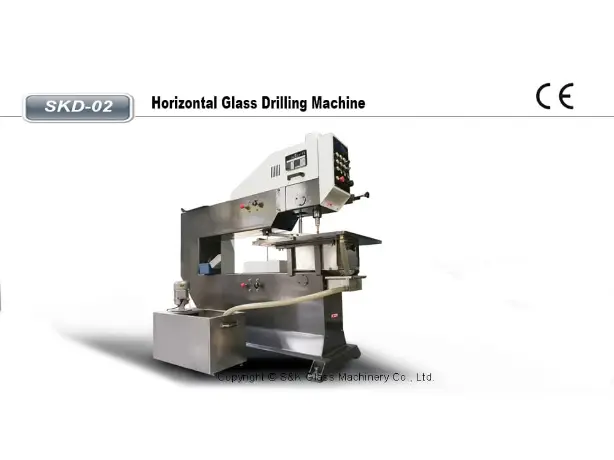
Vertical Orientation
The vertical orientation of the machine means that glass sheets stand upright during the drilling process. This setup involves loading the glass onto a conveyor system, where it is securely clamped along its bottom edge and supported by rollers or suction cups. The drilling heads then move horizontally and vertically to the programmed coordinates to perform the drilling. This setup allows for a much smaller footprint and efficient use of space.
Dual-Head Counter-Drilling
One of the key innovations in vertical glass drilling machines is the principle of dual-head counter-drilling. The machine is equipped with two opposing drill spindles mounted on a movable carriage on opposite sides of the glass. When a hole is programmed, both drills advance toward the glass simultaneously, meeting precisely in the center of the glass thickness. This synchronized action ensures exceptional speed and superior quality of the holes produced.
CNC Control
The entire drilling process is automated using a CNC (Computer Numerical Control) system. The operator loads a digital program containing the exact coordinates and sizes of all the holes, and the CNC controller directs the movement of the glass on the conveyor and the precise positioning of the drill heads. This digital control eliminates human error, ensuring that every hole is perfectly placed according to the design specifications.
Critical Components of a Vertical Drilling Machine
Understanding the core components of a vertical drilling machine is crucial for making an informed purchase. Here are the key parts that work together to deliver speed, accuracy, and reliability.
Vertical Frame and Support Structure
The vertical frame is the backbone of the machine, a heavy, rigid structure made from welded steel. Its primary function is to provide a stable and accurate platform for all the other components. It must support the weight of the glass and absorb vibrations from the drilling process, ensuring precision over many years of operation.
Conveyor and Clamping System
The conveyor and clamping system is responsible for moving and securing the glass. The conveyor system moves the glass horizontally to the correct drilling position, while the clamping system holds the glass firmly against the support structure, preventing movement during the drilling cycle.
Dual Drilling Head Assembly
The dual drilling head assembly is the heart of the machine, consisting of two independent, high-speed spindles mounted on a movable carriage. These spindles hold diamond core drills and are engineered for perfect alignment, ensuring that the two drills meet exactly in the center of the glass. This precision is a hallmark of a high-quality machine.
CNC Controller and Software
The CNC controller acts as the brain of the machine, reading drilling programs and sending precise electrical signals to the servo motors that drive the conveyor and drill heads. A good CNC software system has an intuitive graphical interface for importing design files, managing tool libraries, and monitoring machine status.
Coolant System
The coolant system is vital for maintaining drill bit life and reducing heat during drilling. Through-the-spindle coolant systems deliver coolant directly to the drill bits, ensuring the coolant reaches the tip of the drill, even in thick glass. The system includes a reservoir, pumps, and a filtration unit to remove glass particles and recirculate the coolant.
Operational Workflow of a Vertical Glass Drilling Machine
The operational workflow is designed to be as fast and automated as possible, from loading the raw glass to unloading the finished piece. Here's a step-by-step breakdown:
Step 1: Drilling Program Creation and Loading
The process begins with a digital design, where a CAD technician creates a drawing specifying the size, location, and diameter of each hole. This file is loaded into the machine's control software, and the operator assigns the correct drill bits from the tool library to each hole size. The completed program is then run for multiple cycles.
Step 2: Glass Sheet Loading
The operator loads a sheet of glass onto the infeed section of the machine's conveyor. The glass is placed upright, resting on the track, and clamped against support rollers. In fully automated lines, this loading process may be performed by a robotic arm or automatic loading system.
Step 3: Automatic Clamping and Positioning
Once initiated, the machine's clamping system secures the glass sheet while moving it horizontally to position the first programmed hole between the drilling heads. The CNC controller synchronizes these movements for precise positioning.
Step 4: Counter-Drilling Process
With the glass in position, the drilling cycle begins. The two drill spindles rotate at high speed, advancing toward the glass simultaneously. One drill cuts from the front face, and the other from the back face. They are programmed to stop just before reaching the center, leaving a thin membrane of glass. One drill retracts while the other advances to break the membrane, executing this process for each hole in the program.
Step 5: Unloading the Finished Piece
After the drilling cycle, the clamping system disengages, and the conveyor moves the finished piece to the outfeed section. The operator can then safely unload the glass onto a transport rack. In automated lines, the glass continues to the next process, such as washing or tempering.
Primary Advantages of a Vertical Drilling Machine
Vertical glass drilling machines offer numerous advantages, including superior space efficiency, unmatched production speed, and top-quality hole results. Understanding these benefits can help make an informed purchasing decision.
Space Efficiency
The vertical design has a much smaller footprint, reducing the required floor space by up to 60%. For workshops where space is limited, this compact design offers a significant advantage, optimizing factory layout and workflow.
Production Speed
By drilling holes rapidly and precisely, vertical machines can achieve high-throughput capabilities. The dual-head counter-drilling system enhances production speed and efficiency, allowing for large-scale and high-precision drilling operations.
Hole Quality
Vertical machines consistently produce clean, burr-free holes that are precise and of high quality, essential for industries requiring consistent drilling accuracy.
Workforce Efficiency
Vertical drilling machines reduce the physical strain on operators by eliminating the need to lift and position heavy glass sheets manually. The streamlined workflow and ergonomic design ensure efficient operation.
Buying Tips for Vertical Glass Drilling Machines
When purchasing a vertical glass drilling machine, consider several key factors to ensure you select the best machine for your needs.
Size and Capacity
Consider the maximum glass size your machine needs to handle and the range of hole sizes it must accommodate. Variables such as maximum glass thickness, minimum glass size, and drilling depth are crucial for determining the appropriate drilling machine.
Precision and Accuracy
High-precision drilling is imperative for maintaining quality control. Look for machines with robust CNC control systems, ensuring precise hole placement and consistent results.
Brand and Reliability
Choose a reputable brand known for producing high-quality, durable machines. SANKEN, a trusted name in glass processing equipment, offers a wide range of vertical glass drilling machines that excel in precision and reliability. SANKEN's vertical drills are built with durable construction, advanced features, and operator-friendly controls, ensuring smooth and efficient operation.
Performance Specifications
Evaluate the machine's drilling speed, power consumption, and overall performance specifications. Ensure the machine meets your production requirements while maintaining energy efficiency. SANKEN's VTS 04 Boxer Maxi and VTS 03 Scout are popular models that combine compact design with robust performance, providing excellent drilling capabilities while minimizing power consumption.
Maintenance and Support
Check the machine's maintenance requirements and availability of spare parts. Look for a machine that is easy to maintain and backed by reliable customer support. SANKEN provides comprehensive support, including installation, training, and maintenance services, ensuring long-term reliability.
SANKEN Vertical Glass Drilling Machines: A Leader in Precision Glass Drilling
SANKEN offers a range of vertical glass drilling machines designed to meet the demands of modern glass fabrication. Key features of SANKEN's machines include:
- Robust Construction and Precision: SANKEN's vertical drills are built with robust frames and dual-drilling heads, ensuring high-precision drilling with minimal maintenance.
- Compact Design: The VTS 04 Boxer Maxi and VTS 03 Scout are popular models that offer space-saving designs without compromising performance. The VTS 04 Boxer Maxi covers a drilling range from 1/8 to 4 (5mm to 100mm) and features motorized vertical adjustment with two speeds. The VTS 03 Scout handles diameters from 1/4 to 4, drilling through glass up to 3/4 thick, and has an open design allowing drilling up to 35 1/2 from the edge of the glass.
SANKEN VTS 04 Boxer Maxi
- Dual Drilling Heads: The VTS 04 Boxer Maxi uses a dual drilling head system for clean and burr-free holes, requiring no secondary finishing.
- Ergonomic Controls: Operators can position and drill holes with one-handed controls, enhancing efficiency and comfort.
- Precision Adjustment: The motorized vertical adjustment offers fine control for drilling on smaller or more delicate pieces.
- Power Consumption: At just 1.8 kW, the Boxer Maxi is highly energy-efficient, making it a cost-effective solution.
SANKEN VTS 03 Scout
- Open Design: The VTS 03 Scout's open design allows drilling up to 35 1/2 from the edge, providing flexibility in positioning holes precisely.
- Versatility: It can handle both large production runs and smaller custom pieces, covering a broad range of hole diameters.
- Built-in Inverter: The inverter allows setting spindle RPM to match specific drill bits and glass thickness, extending bit life and improving hole quality.
SANKEN VTS 02 Mini
- Compact Size: For smaller shops needing precision drilling, the VTS 02 Mini offers a compact design that occupies minimal space.
- Low Power Consumption: The mini model uses only 1.5 kW, making it efficient and energy-conscious.
- Operator Ease: Easy one-handed drilling controls provide a comfortable user experience.
Conclusion
When purchasing a vertical glass drilling machine, it's essential to consider the machine's space efficiency, production speed, and hole quality, among other factors. By evaluating the specific needs of your glass fabrication workflow and choosing a reliable brand like SANKEN, you can ensure you select the best machine for your operations. SANKEN's vertical drills are designed to provide precision, durability, and efficiency, making them an excellent choice for modern glass manufacturing.
Table of Contents
- 1.3CNC Control
- 4.3Hole Quality
GET IN TOUCH WITH Us
recommended articles
SANKEN Glass Machinery is a Guangzhou-based manufacturer and international supplier of glass-processing machinery and complete production-line solutions.
Useful Links
Products
Contact Us
Contact: Dalia Qiu
Tel: +86 15994813914
Landline: +86-20-82347228
Email: sales@sankenglass.com
WhatsApp: +86 15994813914
ADD: No.2, Xinghai Road, Lanhe, Nansha District, Guangzhou City, China. P.C 511480
Copyright © 2026 Guangzhou Sanken Glass Machinery Co., Ltd.| Sitemap