Please fill out the form below to request a quote or to request more information about us. please be as detailed as possible in your message, and we will get back to you as soon as possible with a response. we're ready to start working on your new project, contact us now to get started.
Exporting glass-processing machinery since 2002, with international project support from planning to installation and training.
What's the Real Difference? Glass Edge Grinder vs. Hand Polishing
2026-08-30
SANKEN
50
Glass edge treatment is a crucial step in many manufacturing and finishing processes, ensuring safety, aesthetic appeal, and durability. The methods available for glass edge treatmentsuch as the use of a glass edge grinder and hand polishingeach offer distinct advantages and challenges. This article aims to provide a comprehensive comparison between a glass edge grinder and hand polishing, helping you make an informed decision based on your specific needs.
Introduction to Glass Edge Treatment
Glass edge treatment is a critical process that ensures the safety and aesthetic quality of finished glass products. An improperly treated edge can pose safety risks and reduce the overall quality of the product. The choice between a glass edge grinder and hand polishing depends on various factors, including the type of glass, the desired finish, and the efficiency of the process. This article compares these two methods to help you understand their pros and cons and make an informed decision.
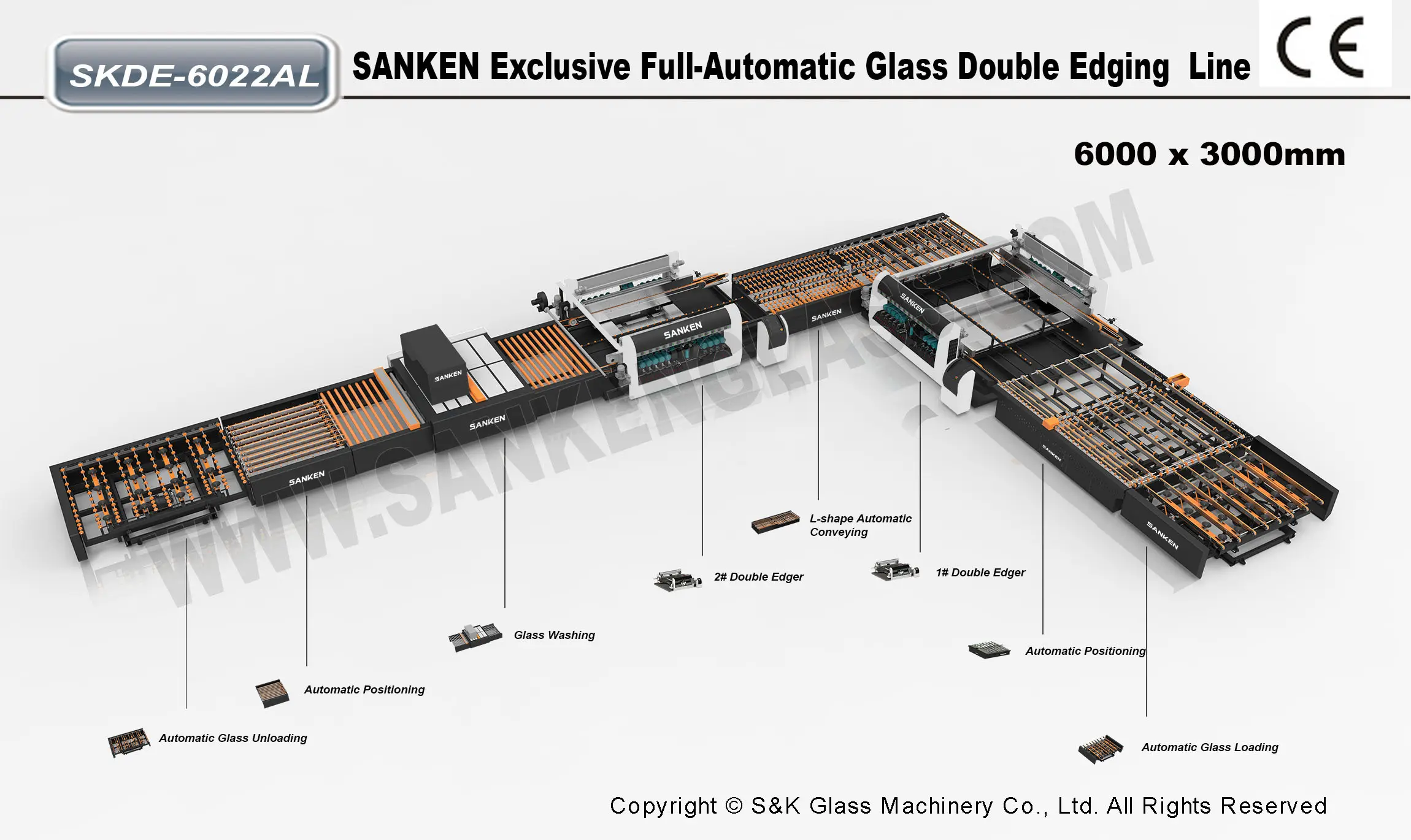
What is a Glass Edge Grinder?
Definition and Working Principles
A glass edge grinder, such as the ones produced by SANKEN, is a machine designed to grind and polish the edges of glass to achieve a smooth, polished finish. It typically consists of a series of grinding wheels or diamond tools that rotate to remove rough edges and surface imperfections. These grinders can handle various types of glass, including clear glass, tinted glass, and tempered glass.
Advantages of a Glass Edge Grinder
- Precision and Consistency
- Automated processes ensure uniformity and consistency in the finished product.
Same results can be achieved with minimal variation from one piece to another.
Efficiency
- High-speed grinding wheels can process large volumes of glass quickly.
Automated systems reduce the time required for manual labor.
Safety
- Reduces the risk of injury associated with manual polishing.
Automated systems ensure that operators are kept at a safe distance from the glass.
Versatility
- Can handle a wide range of glass thicknesses and shapes.
Suitable for both thick and thin glass, including curved edges.
Long-term Cost-Effectiveness
- Lower labor costs as machines require less skilled labor.
Reduced risk of human error leading to rework or waste.
Environmentally Friendly
- Minimal dust and debris generated compared to manual methods.
- Automatic dust collection systems help maintain a clean working environment.
Limitations of a Glass Edge Grinder
- Initial Investment
- Higher upfront cost for purchasing the machine and related tools.
Capital expenditures required for installation and maintenance.
Maintenance Requirements
- Regular maintenance and calibration are necessary to ensure optimal performance.
Routine service checks to inspect and replace worn-out parts.
Skill Level Required
- Operators need training to use the equipment effectively and safely.
Initial training costs and time investment are necessary.
Power Consumption
- Higher power consumption compared to hand polishing.
Additional electricity costs over time.
Complexity
- Requires technical expertise for setup, operation, and troubleshooting.
- Potential downtime during maintenance or repairs.
Specific Examples of SANKEN's Glass Edge Grinder
SANKEN is renowned for producing high-quality and efficient glass edge grinders specifically designed for various applications. Their machines are known for their precision, durability, and ease of use. For example, the SANKEN GL-30Z Glass Edge Grinder is highly sought after for its ability to handle thick glass with ease.
Features of SANKEN GL-30Z:- Precision Control: Automated sensors ensure consistent and uniform grinding.
- Multiple Grinding Wheels: Equipped with up to five rotating grinding wheels.
- Safety Features: Integrated safety mechanisms to protect operators from potential hazards.
- Quick Setup: Easy to set up and operate, with minimal training required.
- Maintenance Friendly: User-friendly design for easy maintenance and service.
What is Hand Polishing?
Definition and Working Principles
Hand polishing involves manually treating the glass edges with various tools and techniques to achieve a smooth, polished finish. This method typically involves using abrasive materials, such as polishing compounds and polishing stones, to remove rough edges and surface imperfections. Hand polishing can be done by hand or with the aid of manual tools, such as files and buffs.
Advantages of Hand Polishing
- Flexibility
- Manual methods are highly flexible and can be adapted to different glass shapes and sizes.
Ideal for small-scale operations and custom projects.
Precision
- Highly detailed work can be achieved with skilled hands.
Customized finishes can be created based on specific requirements.
Versatility
- Compatible with a variety of glass types, including curved edges and irregular shapes.
Hand polishing can be used to achieve a fine, polished finish on delicate pieces.
Immediate Feedback
- Operators can immediately see and feel the results of their work.
Quick adjustments can be made on-the-fly based on the outcome.
Labor Intensive
- Provides employment opportunities for skilled labor.
- Skilled workers can produce high-quality results efficiently.
Limitations of Hand Polishing
- Time-Consuming
- Slower process compared to automated machines.
Longer production times can increase labor costs.
Consistency Issues
- Manual processes can lead to inconsistencies in the final product.
Skilled labor is necessary to ensure consistent results.
Physical Strain
- Physically demanding work, especially for curved or irregular edges.
Higher risk of repetitive strain injuries for operators.
Environmental Impact
- Higher dust and debris generation due to manual grinding.
May require additional equipment for dust control or cleanup.
Skill Level Required
- Requires highly skilled labor to achieve high-quality results.
Training and experience are necessary to produce consistent outcomes.
Cost-Effectiveness
- Higher labor costs can make it less cost-effective for large-scale operations.
- Manual methods may not be as efficient in terms of time and output.
Hand Polishing Techniques
- Buffing Wheels: Use of rotating buffing wheels with polishing compounds to achieve a smooth, polished finish.
- Abrasive Papers: Sandpaper or finer grit papers to remove rough edges and imperfections.
- Polishing Stones: Tools used to manually polish the edges, providing precise control over the process.
- Surfacer Tools: Manual tools used to remove surface imperfections and achieve a consistent finish.
Comparison of Glass Edge Grinder and Hand Polishing
Features
| Feature | Glass Edge Grinder | Hand Polishing |
|---|---|---|
| Precision and Consistency | High | Medium |
| Speed of Process | High | Low |
| Labor Intensity | Low | High |
| Flexibility | Low | High |
| Customization | Low | High |
| Dust Control | High | Low |
Efficiencies
| Efficiency | Glass Edge Grinder | Hand Polishing |
|---|---|---|
| Time to Process (per piece) | Short | Long |
| Labor Costs | Low | High |
| Production Output | High | Low |
| Quality Control | High | Medium |
Costs
| Cost Category | Glass Edge Grinder | Hand Polishing |
|---|---|---|
| Initial Investment | High | Low |
| Running Costs | Low | High |
| Maintenance Costs | Medium | Low |
| Operating Costs | Medium | High |
Maintenance
| Maintenance Aspect | Glass Edge Grinder | Hand Polishing |
|---|---|---|
| Regular Cleaning and Servicing | High | Low |
| Service Frequency | Quarterly | As Needed |
| Replacement Parts | High | Low |
| Complexit | High | Low |
Example: SANKEN's GL-30Z vs. Hand Polishing
To provide a more concrete comparison, let's consider how the SANKEN GL-30Z Glass Edge Grinder compares to hand polishing for treating thick glass (e.g., 10mm thick curved glass).
GL-30Z Glass Edge Grinder
- Precision and Consistency: The automated system ensures that each piece of glass is ground to a consistent, smooth finish.
- Speed of Process: Approximately 1-2 minutes per piece, depending on the machine and setup.
- Labor Intensity: Minimal, with most of the work being automated.
- Flexibility: Limited flexibility in manual adjustments, but can handle various glass types with uniform quality.
- Customization: Lower customization options, but produces consistent results.
- Dust Control: Integrated dust collection system minimizes environmental impact.
Hand Polishing (Example Setup)
- Precision and Consistency: Requires skilled labor to ensure consistent results, with potential for variations between pieces.
- Speed of Process: Approximately 10-15 minutes per piece, depending on the complexity of the edge.
- Labor Intensity: High, with skilled labor required for quality control.
- Flexibility: High flexibility in adjusting the process to fit different glass shapes and requirements.
- Customization: High customization options, allowing for unique finishes.
- Dust Control: Higher dust generation, requiring additional measures for cleanup.
Practical Advice for Choosing the Right Method
Considering Your Needs
When deciding between a glass edge grinder and hand polishing, consider the following key factors:
- Glass Size and Shape:
- A glass edge grinder is ideal for treating large quantities of glass with uniform shapes.
Hand polishing is more suitable for smaller, custom pieces with irregular shapes.
Precision Requirements:
- If high precision and consistency are critical, a glass edge grinder is the better choice.
Hand polishing can provide highly detailed, customized finishes that may not be achievable with automated machines.
Labor Availability:
- If skilled labor is readily available and cost-effective, hand polishing may be a viable option.
Automated machines reduce the need for skilled labor, making them more cost-effective in some cases.
Initial and Ongoing Costs:
- Consider the upfront investment for purchasing and setting up the equipment.
- Evaluate the ongoing costs, including labor, maintenance, and service, to determine long-term cost-effectiveness.
Example Scenarios
- Large-Scale Production:
- Glass Edge Grinder: Economical for high-volume production with consistent results. Example: Producing 100 glass panels, each with a consistent, smooth finish using the SANKEN GL-30Z.
Hand Polishing: More labor-intensive and costly for large-scale production. Example: Producing 10 specialized glass pieces with unique curved edges for custom projects.
Custom and Small-Batch Projects:
- Hand Polishing: Ideal for custom projects where precise, detailed finishes are required. Example: Creating a series of custom glass vases with intricate, polished edges.
- Glass Edge Grinder: Can handle custom projects but may lack the flexibility for highly detailed work. Example: Preparing 20 pieces of glass for architectural applications with consistent finishes.
Final Thoughts
In conclusion, the choice between a glass edge grinder and hand polishing ultimately depends on your specific needs and circumstances. While a glass edge grinder offers efficiency, precision, and consistency, hand polishing provides flexibility, customization, and the ability to achieve highly detailed finishes. By considering factors such as glass size and shape, precision requirements, labor availability, and costs, you can make an informed decision that best suits your needs.
SANKEN's glass edge grinders, like the GL-30Z, offer a reliable solution for large-scale production, providing consistent results with minimal labor and maintenance requirements. For custom and small-batch projects, hand polishing remains a viable option, offering unique and detailed finishes that may not be achievable with automated machines.
By understanding the key differences between these two methods, you can make an informed decision to achieve the best results for your specific project. Whether you choose a glass edge grinder or hand polishing, the right method will ensure that your glass edges are treated to the highest standards.
Contact SANKEN for more information on their range of glass edge grinders and to find the best solution for your glass edge treatment needs.
Table of Contents
- 4.1Features
- 4.2Efficiencies
- 4.3Costs
- 4.4Maintenance
GET IN TOUCH WITH Us
recommended articles
SANKEN Glass Machinery is a Guangzhou-based manufacturer and international supplier of glass-processing machinery and complete production-line solutions.
Useful Links
Products
Contact Us
Contact: Dalia Qiu
Tel: +86 15994813914
Landline: +86-20-82347228
Email: sales@sankenglass.com
WhatsApp: +86 15994813914
ADD: No.2, Xinghai Road, Lanhe, Nansha District, Guangzhou City, China. P.C 511480
Copyright © 2026 Guangzhou Sanken Glass Machinery Co., Ltd.| Sitemap