Please fill out the form below to request a quote or to request more information about us. please be as detailed as possible in your message, and we will get back to you as soon as possible with a response. we're ready to start working on your new project, contact us now to get started.
Exporting glass-processing machinery since 2002, with international project support from planning to installation and training.
The Key Difference Between Mobile Glass Cutting Machine and Traditional Cutters
2026-08-22
SANKEN
13
When it comes to glass cutting, professionals in various industries have options ranging from traditional cutters to modern mobile glass cutting machines. This article delves into the key differences between these two types of tools, highlighting their advantages, features, and applications. Whether you're working on architectural projects, automotive glass, or custom decorative pieces, understanding these differences can greatly impact your efficiency and quality.
What is a Mobile Glass Cutting Machine?
A mobile glass cutting machine is a portable device designed for on-site production of glass, particularly tempered glass. These machines are compact and lightweight, making them ideal for carrying and using in various locations. They typically feature advanced cutting technologies and precise control systems to ensure high-quality glass output. Mobile glass cutting machines are increasingly popular due to their versatility and precision.
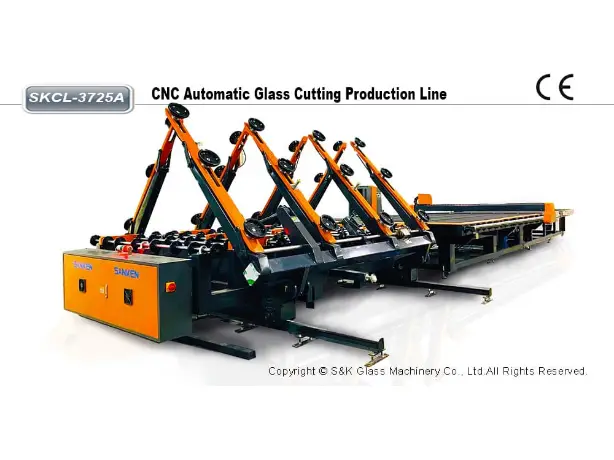
Key Features of Mobile Glass Cutting Machines
- Portable: Easy to carry and use on-site.
- Advanced Cutting Technologies: Laser, water jet, and mechanical cutting technologies.
- Automated Features: From manual to fully automated, offering various levels of control.
- Efficiency: High-speed cutting, improving production efficiency.
- User-Friendly: Intuitive interfaces and simple operation processes.
Benefits of Mobile Glass Cutting Machines
- Precision: Capable of achieving high precision and accuracy in cutting.
- Versatility: Can handle a variety of glass types and complex cutting patterns.
- Flexibility: Suitable for multiple applications, including automotive, construction, and decorative projects.
Traditional Cutters Overview
Traditional cutters, on the other hand, are manual cutting tools that have been used for decades. They require manual operation and are typically less precise compared to modern mobile glass cutting machines. While they are still widely used, they lack the advanced features and precision of their modern counterparts.
Key Features of Traditional Cutters
- Manual Operation: Requires manual cutting and positioning.
- Limited Precision: Lower accuracy and precision compared to modern machines.
- Simple Design: Basic tools with limited capabilities.
Benefits of Traditional Cutters
- Cost-Effective: Cheaper upfront costs compared to mobile machines.
- Simple Maintenance: Requires minimal maintenance and less frequent repairs.
- Ease of Use: Familiar to older professionals and simpler projects.
Key Differences: Power Source
Mobile Glass Cutting Machines
One of the primary considerations for mobile glass cutting machines is their power source, which is typically either electric or battery-powered.
Electric-Powered Machines
Electric-powered mobile glass cutting machines are ideal for projects where consistent power is readily available. These machines offer steady performance and can handle continuous operation without the need for recharging. They are perfect for indoor or work environments with reliable access to electricity.
Key Features:
- Stable Performance: Consistent operation with reliable power supply.
- High Efficiency: Continuous operation without downtime.
- Powerful: Deliver high power output for efficient cutting.
Drawback:
- Limited Mobility: Need for a power outlet or extension cord to operate.
- Dependent on Power Source: Possible interruptions if power supply is compromised.
SANKEN's portable glass cutting machines are powered by high-capacity lithium-ion batteries, offering unparalleled flexibility and portability. These machines can be used in remote locations or areas where electricity is limited.
Key Features:
- Unparalleled Flexibility: Ideal for on-site and remote locations.
- Long Battery Life: Advanced battery technology extends runtime and performance.
- Maintenance-Free: Minimal downtime due to shorter charging times.
Drawback:
- Shorter Runtime: Limited by battery life, although improvements in technology have extended this.
- Additional Power Requirement: Need for charging dock or power source when batteries need recharging.
Traditional Cutters
Traditional cutters rely on manual power, where cutting is done by hand using a cutter wheel or similar tool. They do not require any additional power source and are operated entirely manually.
Key Features:
- Manual Power: No need for electricity, battery, or other external power sources.
- Simple Maintenance: Lower maintenance requirements and less frequent repairs.
Drawback:
- Low Precision: Relatively lower accuracy and precision in cutting.
- Limited Efficiency: Less efficient and slower compared to modern machines.
Example Comparison Table
| Feature | Mobile Glass Cutting Machine | Traditional Cutter |
|---|---|---|
| Power Source | Electric or Battery | Manual |
| Mobility | Highly mobile with battery or power | Limited mobility, manual |
| Precision | High precision and accuracy | Lower precision and accuracy |
| Efficiency | High efficiency and speed | Lower efficiency and speed |
Key Differences: Cutting Capacity
Mobile Glass Cutting Machines
Mobile glass cutting machines can handle a wide range of cutting capacities, from small to large glass sheets. They are equipped with advanced cutting technologies capable of handling different glass types and thicknesses.
Key Features:
- Maximum Glass Thickness: Capable of cutting thick and complex glass shapes.
- Cutting Speed: High-speed cutting capabilities.
- Flexibility: Wide variety of cutting patterns and shapes.
Example:
SANKEN's portable glass cutting machine can handle glass thicknesses up to 6mm and lengths up to 3 meters, providing high-quality cuts.
Traditional Cutters
Traditional cutters typically handle smaller and simpler cutting tasks, making them less suitable for large-scale or complex projects.
Key Features:
- Maximum Glass Thickness: Limited to smaller glass sheets and simpler patterns.
- Cutting Speed: Slower and less efficient compared to mobile machines.
- Pattern Flexibility: Limited to basic straight cuts or simple curved patterns.
Example:
A standard manual cutter can handle glass sheets up to 2mm thick but struggles with large sheets or complex shapes.
Example Comparison Table
| Feature | Mobile Glass Cutting Machine | Traditional Cutter |
|---|---|---|
| Maximum Glass Thickness | Up to 6mm | Up to 2mm |
| Cutting Speed | High-speed cutting (up to 1000mm/min) | Manual cutting, slower |
| Pattern Flexibility | Complex and precise patterns | Basic straight cuts |
Key Differences: Automated Features
Mobile Glass Cutting Machines
Mobile glass cutting machines offer a range of automated features, from manual to fully automated systems. These features enhance efficiency and consistency in glass cutting.
Key Features:
- Automation Levels: Manual, semi-automatic, and fully automatic.
- Cutting Operations: Automated cutting motion, material handling, and unloading.
- User-Friendly: Intuitive interfaces, remote control via smartphone or tablet.
SANKEN's portable glass cutting machine provides advanced automation options, including:
- Automatic Material Handling: Fully automated material feeding and unloading.
- Remote Control: App-based control for precise and efficient operation.
- Sensor Technology: Advanced sensors for precise cutting and monitoring.
Traditional Cutters
Traditional cutters lack the advanced automation features found in modern cutting machines. They rely on manual operation and human skill for accurate cutting.
Key Features:
- Manual Operation: Operated entirely by hand.
- Limited Automation: Basic manual tools with no advanced features.
- Simplistic Design: Traditional tools with limited capabilities.
Example:
Manual cutters require constant supervision and skill, making them less efficient for large-scale production.
Example Comparison Table
| Feature | Mobile Glass Cutting Machine | Traditional Cutter |
|---|---|---|
| Automation Levels | Manual, Semi-Automatic, Fully-Automated | Manual |
| Cutting Operations | Automated material handling and unloading | Manual handling and cutting |
| User Interface | Intuitive interfaces, app-based remote control | Manual operation |
Key Differences: Precision and Quality
Mobile Glass Cutting Machines
Mobile glass cutting machines are renowned for their high precision and consistent quality. Advanced sensor technologies and precision control systems ensure clean, accurate cuts every time.
Key Features:
- Cutting Accuracy: 0.01mm precision cutting.
- Quality Control: Advanced quality control systems for consistent output.
- Consistency: High-quality and precise cuts for every piece of glass.
SANKEN's portable glass cutting machine ensures high-quality output with:
- Advanced Sensor Technology: For precise cutting and monitoring.
- Multi-Sensor Systems: Advanced precision and quality monitoring.
- Consistent Quality Control: Ensuring every cut meets high standards.
Traditional Cutters
Traditional cutters are less precise and consistent compared to their modern counterparts. While they can achieve acceptable results, they lack the advanced precision and quality control of mobile machines.
Key Features:
- Cutting Accuracy: Lower precision and accuracy compared to modern machines.
- Consistency: Less consistent quality due to manual handling and lack of advanced control systems.
- Uniformity: Variations in cuts due to manual handling and skill level.
Example:
Manual cutters may produce acceptable results but may vary in quality due to human error and skill level.
Example Comparison Table
| Feature | Mobile Glass Cutting Machine | Traditional Cutter |
|---|---|---|
| Cutting Accuracy | 0.01mm | 0.1mm or higher |
| Quality Control | High-quality control systems | Manual quality control |
| Consistency | High consistency and uniformity | Lower consistency and uniformity |
Key Differences: Maintenance and Service
Mobile Glass Cutting Machines
Mobile glass cutting machines are designed for durability and low-maintenance operation. Routine maintenance such as cleaning and lubrication can extend their lifespan and ensure efficient performance.
Key Features:
- Durable Construction: Durable build quality for long-term use.
- Regular Maintenance: Routine cleaning and lubrication to reduce downtime.
- Service Contracts: Optional service contracts for regular maintenance and support.
SANKEN's portable glass cutting machine offers:
- Low-Maintenance Design: Durable and reliable construction.
- Routine Maintenance: Regular cleaning and lubrication.
- Service Contracts: Optional service contracts for ongoing support.
Traditional Cutters
Traditional cutters require regular maintenance and occasional repairs to keep them operational. They are less durable and may require more frequent repairs.
Key Features:
- Maintenance Required: Regular cleaning and maintenance.
- Repairable: Occas. As replacements may be needed over time.
- Durable: Less durable than modern machines.
Example:
Manual cutters may require regular cleaning and occasional replacement of parts due to their manual operation.
Example Comparison Table
| Feature | Mobile Glass Cutting Machine | Traditional Cutter |
|---|---|---|
| Maintenance | Low-maintenance design | Regular maintenance |
| Service Contracts | Optional service contracts | No service contracts |
| Durable Construction | Durable, reliable build quality | Less durable |
Key Differences: Cost Analysis
Mobile glass cutting machines have a higher initial investment compared to traditional cutters. However, they offer long-term savings and better ROI due to their high efficiency and low operational costs.
Key Features:
- Initial Investment: Higher initial cost due to advanced technology.
- Operational Costs: Lower operational costs due to high-efficiency and automation.
- Lifetime Savings: Lower long-term costs due to low maintenance and enhanced production.
Traditional Cutters
Traditional cutters have a lower initial investment cost, making them a more cost-effective option for small-scale or occasional use.
Key Features:
- Initial Investment: Lower initial cost.
- Operational Costs: Higher operational costs due to manual handling and maintenance.
Example:
A manual cutter may cost $100, while a mobile glass cutting machine may cost $2000 initially. However, the mobile machine provides significant savings over time due to its efficiency and reliability.
Long-Term Cost Considerations
Mobile glass cutting machines, such as SANKEN's portable glass cutting machine, offer the following long-term benefits:
- Durable and Reliable: Long-term use without frequent repairs.
- Low-Maintenance: Reduced downtime and maintenance costs.
- High Efficency: Increased productivity and project output.
- Warranty Coverage: Comprehensive warranty and service contracts.
In contrast, traditional cutters may require frequent repairs and maintenance, leading to higher long-term costs.
Example Cost Table
| Cost Component | Mobile Glass Cutting Machine | Traditional Cutter |
|---|---|---|
| Initial Investment | $2000 to $5000 | $100 to $500 |
| Operational Costs | $0.50 to $1.00 per hour | $1.00 to $2.00 per hour |
| Long-Term Savings | High ROI due to low maintenance and high efficiency | Lower ROI due to manual handling and higher maintenance costs |
Conclusion
In summary, the key differences between mobile glass cutting machines and traditional cutters are significant. Mobile glass cutting machines offer higher precision, automated features, and long-term cost savings, making them a better investment for businesses looking for high-quality, efficient glass cutting solutions.
Whether you are working on architectural projects, automotive glass, or custom decorative pieces, understanding these differences can greatly impact your efficiency and quality. SANKEN's portable glass cutting machines provide the precision, efficiency, and reliability needed for high-quality glass cutting, ensuring you can meet your project requirements with ease.
For more detailed information and to explore the features of SANKEN's portable glass cutting machines, contact our team of experts today. We are here to help you take your glass cutting capabilities to the next level.
Table of Contents
- 8.4Conclusion
GET IN TOUCH WITH Us
recommended articles
SANKEN Glass Machinery is a Guangzhou-based manufacturer and international supplier of glass-processing machinery and complete production-line solutions.
Useful Links
Products
Contact Us
Contact: Dalia Qiu
Tel: +86 15994813914
Landline: +86-20-82347228
Email: sales@sankenglass.com
WhatsApp: +86 15994813914
ADD: No.2, Xinghai Road, Lanhe, Nansha District, Guangzhou City, China. P.C 511480
Copyright © 2026 Guangzhou Sanken Glass Machinery Co., Ltd.| Sitemap