Please fill out the form below to request a quote or to request more information about us. please be as detailed as possible in your message, and we will get back to you as soon as possible with a response. we're ready to start working on your new project, contact us now to get started.
Exporting glass-processing machinery since 2002, with international project support from planning to installation and training.
Standalone vs. Integrated Line Glass Processing Machinery for Production Flow
2026-08-04
SANKEN
39
Glass processing machinery plays a crucial role in manufacturing efficient and high-quality glass products. As the industry continues to evolve, choosing the right type of machinery can significantly impact productivity, efficiency, and output quality. In this article, we will compare and contrast standalone glass processing machines with integrated lines, highlighting the advantages and disadvantages of each option.
Overview of Glass Processing Machinery
Glass processing machinery encompasses a wide range of equipment designed to handle various stages of glass production, from cutting and tempering to edging and polishing. These machines are essential for producing precise and uniform glass products, ensuring consistency and reliability in manufacturing environments.
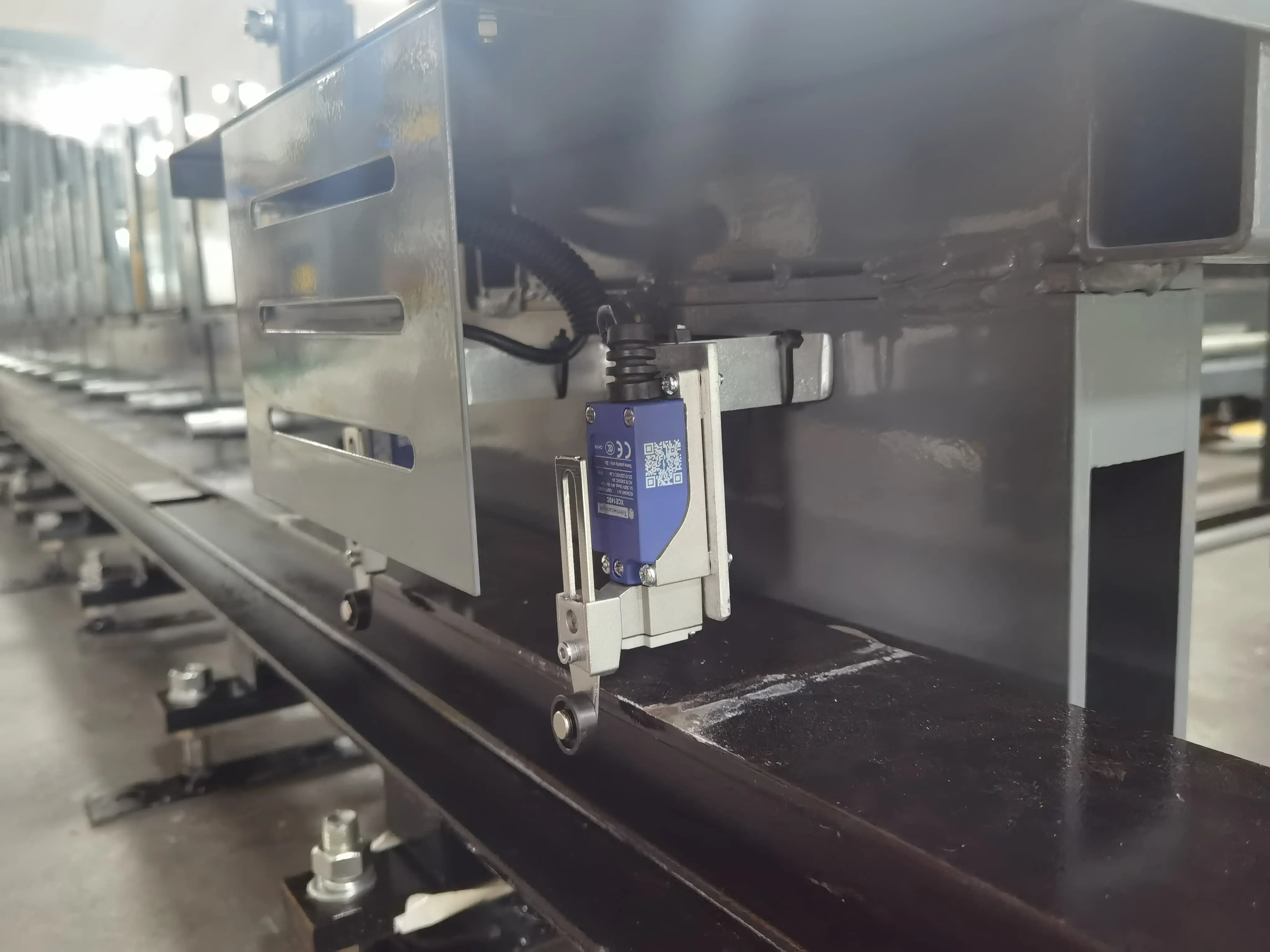
Types of Machines
There are two primary types of glass processing machinery:
1. Standalone Machines2. Integrated Lines
Standalone Glass Processing Machines
Standalone machines are individual units designed to perform specific tasks within the glass processing workflow. They offer flexibility and ease of use, making them ideal for smaller production environments.
Key Features and Applications
- Cutting Machines: These machines are designed to cut glass sheets into precise dimensions.
- Tempering Furnaces: Used to strengthen glass by heating and cooling it rapidly.
- Edgers: Reshape the edges of glass sheets to ensure they are smooth and safe.
- Polishing Equipment: Finishes the surface of glass to achieve a high-quality finish.
Advantages
- Flexibility: Standalone machines can be configured to perform individual tasks.
- Cost-Effective: They are generally less expensive than integrated lines.
- Ease of Maintenance: Simple to maintain and service due to their modular design.
- Customization: Can be easily adjusted to suit specific requirements.
Disadvantages
- Scalability: Limited when expanding production due to the need for additional machines.
- Efficiency: May not be as efficient as integrated lines in terms of throughput.
Example: SANKEN Standalone Glass Edger Machine
The SANKEN standalone glass edger machine is a versatile piece of equipment designed for precision edging. It offers:
- High Precision: Ensures consistent edge quality.
- User-Friendly Interface: Easy to operate and program.
- Modular Design: Can be integrated into existing production lines.
Integrated Line Glass Processing Machines
Integrated lines are a series of connected machines that work together to perform multiple processes in a single system. They are designed for large-scale production environments where efficiency and throughput are critical.
Key Features and Applications
- Cutting and Tempering Line: Combines multiple functions into one system.
- Automation: Reduces manual labor and increases efficiency.
- Quality Control: Built-in inspection systems ensure high-quality output.
Advantages
- Efficiency: High throughput and minimal downtime.
- Scalability: Easily expandable to meet higher production demands.
- Automation: Reduces labor costs and improves consistency.
- Quality Control: Integrated systems ensure uniform quality throughout the process.
Disadvantages
- Cost: Higher initial investment compared to standalone machines.
- Complexity: More complex setup and maintenance requirements.
- Limited Flexibility: May require additional customization for specific tasks.
Example: SANKEN Integrated Line for Large Factories
The SANKEN integrated line is designed for high-volume production environments. It includes:
- Cutting and Tempering Line: Combines precision cutting and tempering processes.
- Automated Feeding System: Ensures continuous operation and minimal downtime.
- Advanced Inspection Technology: Real-time monitoring and quality control.
Comparative Analysis
Table: Comparison of Standalone vs. Integrated Line Machines
| Feature/Aspect | Standalone Machines | Integrated Lines |
|---|---|---|
| Initial Investment | Lower | Higher |
| Throughput | Lower | Higher |
| Customization | High | Low |
| Ease of Maintenance | High | Low |
| Labor Requirements | Higher | Lower |
| Scalability | Limited | High |
| Automation | Low | High |
| Quality Control | Basic | Advanced |
| Modularity | High | Low |
Practical Scenarios
- Small Production Units: Suitable for standalone machines due to their flexibility and lower cost.
- Large Factories: Integrated lines are more efficient and provide higher throughput, reducing downtime and increasing productivity.
Highlighting SANKEN Brand Advantages
SANKEN is renowned for its high-quality glass processing machinery. Here are some key benefits:
- Precision Engineering: SANKEN machines are known for their precision and reliability.
- Advanced Technology: Incorporates the latest technology for improved performance.
- Customer Support: Comprehensive after-sales support and maintenance services.
- Customization Options: Tailored solutions for specific production needs.
Case Studies or Testimonials (if available)
- Customer Testimonial: "We have been using SANKEN's integrated line for our large factory, and it has significantly improved our throughput and quality control."
Conclusion
Choosing between standalone glass processing machines and integrated lines depends on your specific production needs. Standalone machines offer flexibility and cost-effectiveness, while integrated lines provide higher throughput and automation. For small to medium-sized production units, standalone machines may be the better choice. For large factories with high-volume production, integrated lines are the preferred option due to their efficiency and scalability.
In summary, SANKEN's machinery offers a blend of precision, technology, and reliability, making it a strong choice for any glass processing environment. Consider your production requirements, budget, and potential for growth when making your decision.
Recommendations
- Small-Scale Production: Opt for standalone machines if flexibility and lower upfront costs are a priority.
- Large-Scale Production: Invest in an integrated line to maximize efficiency and throughput.
By understanding the advantages and disadvantages of each type of machinery, you can make an informed decision that aligns with your production goals.
Table of Contents
- 2.1.1Advantages
- 2.1.2Disadvantages
- 3.1.1Advantages
- 3.1.2Disadvantages
GET IN TOUCH WITH Us
recommended articles
SANKEN Glass Machinery is exhibiting at SIFFP 2026 in Algiers, Algeria, from September 20–23, 2026. Visit Booth AC08 to discuss glass processing machinery, automated production lines and complete glass processing solutions.
SANKEN Glass Machinery is a Guangzhou-based manufacturer and international supplier of glass-processing machinery and complete production-line solutions.
Useful Links
Products
Contact Us
Contact: Dalia Qiu
Tel: +86 15994813914
Landline: +86-20-82347228
Email: sales@sankenglass.com
WhatsApp: +86 15994813914
ADD: No.2, Xinghai Road, Lanhe, Nansha District, Guangzhou City, China. P.C 511480
Copyright © 2026 Guangzhou Sanken Glass Machinery Co., Ltd.| Sitemap